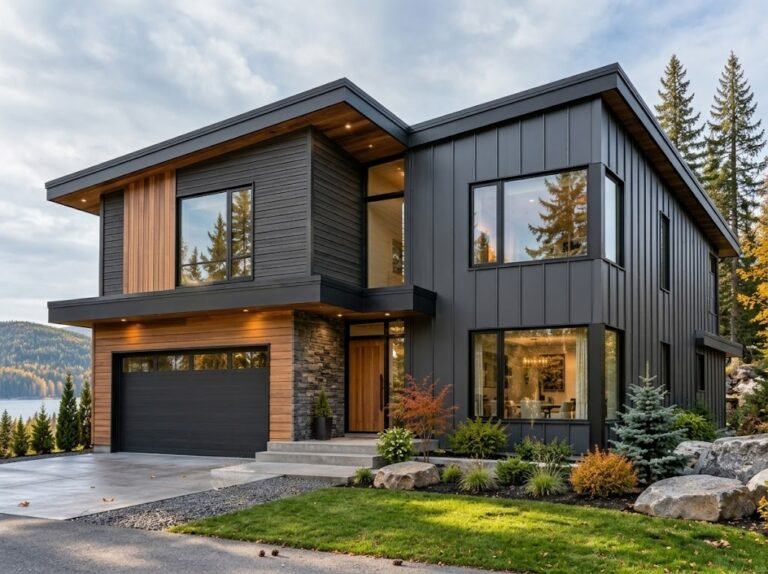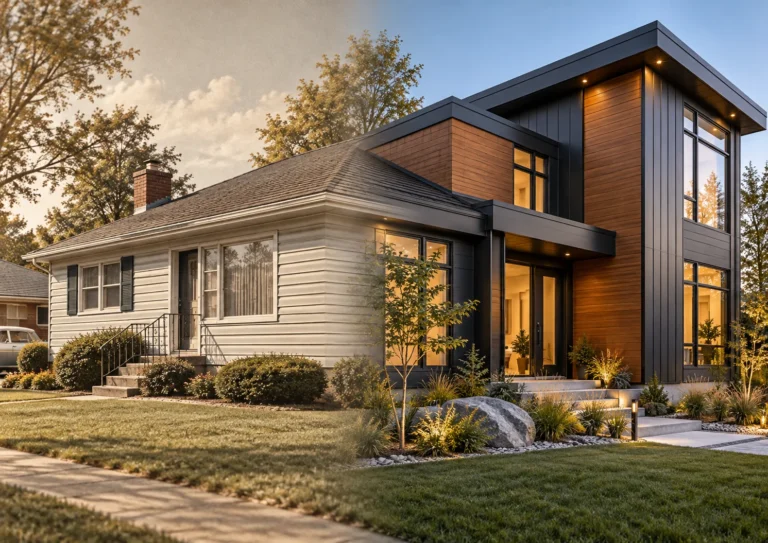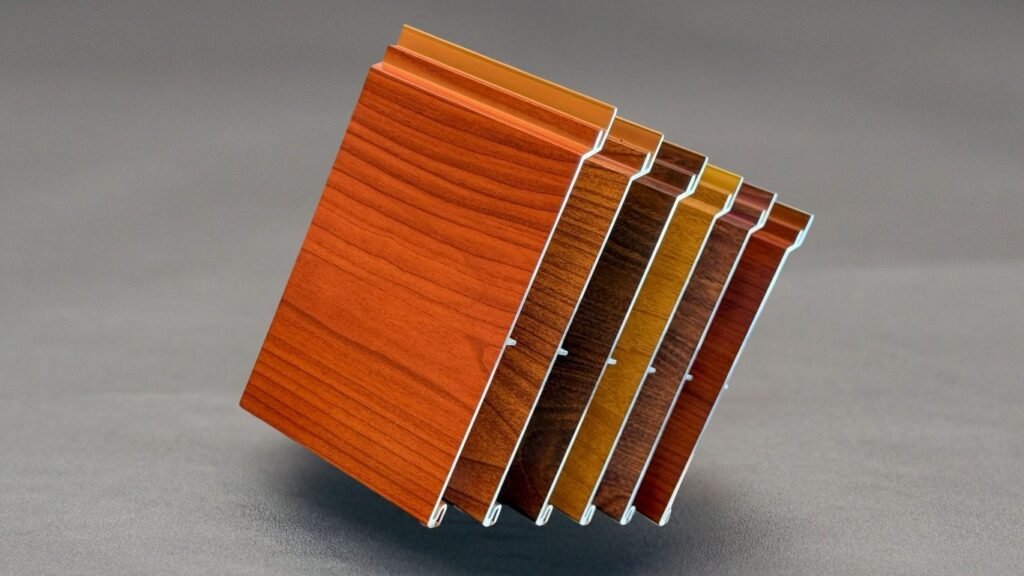
Wood siding brings warmth and natural character to a home. Keeping a particular wood colour, however, can mean returning to the exterior for staining, sealing or refinishing as it weathers.
Wood grain aluminum siding offers another way to achieve that appearance. It combines an aluminum profile with a manufactured wood-look finish, giving homeowners an option that reduces routine refinishing while creating a warm, architectural exterior.
The decision involves more than choosing a convincing grain pattern. Profile construction, installation details, finish quality and total project cost all matter. This guide explains those factors and uses the VEDREX extruded aluminum system as a practical example of how they come together.
What Is Wood Grain Aluminum Siding?
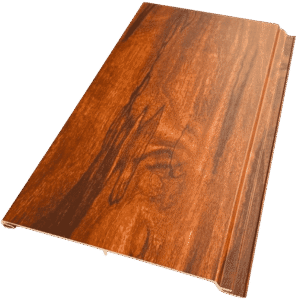
Wood grain aluminum siding is aluminum cladding with a surface finish that reproduces wood tones and grain patterns. It does not contain natural wood boards. Terms such as wood-look aluminum siding and wood-effect aluminum cladding generally describe the same broad category.
Finishing methods vary. One method uses heat to transfer a decorative grain pattern into a prepared powder-coated surface. Architectural finisher Linetec describes this as a dye-sublimation process. The result combines a wood-inspired appearance with a metal substrate. Read Linetec’s explanation of woodgrain finishing.
The underlying profile matters too. Some products use formed aluminum sheet; others use extruded aluminum. Extrusion pushes aluminum through a shaped die to create a defined cross-section, as explained by the Aluminum Extruders Council. This makes it possible to incorporate grooves, edges and connection details into the profile.
VEDREX belongs to the extruded category. Its published specifications list 6063-T6 aluminum and a 1.6 mm wall thickness for the 4-inch and 6-inch V-groove siding profiles. These details do not make every extruded product automatically superior, but they give buyers something measurable to compare with thin formed-sheet alternatives. View VEDREX aluminum siding specifications.
When comparing products, ask to see the full profile and installation details alongside the colour sample.
Does Wood Grain Aluminum Siding Actually Look Like Real Wood?
A woodgrain finish can suggest the warmth of timber without reproducing every characteristic of a natural board. At close range, grain repetition, surface texture and the way the material reflects light can reveal the difference.
Several choices influence the finished appearance:
- Grain and colour variation: Compare several sample pieces to judge repetition and contrast.
- Profile width: Narrow boards create more lines; wider boards give the grain more uninterrupted space.
- Joints and trims: Corners, plank ends and window surrounds become part of the design.
- Viewing distance: An entrance seen from a few feet away deserves a different sample review from an upper-storey accent.
VEDREX offers more than 20 woodgrain options, so the useful first step is not choosing from a screen. Shortlist a few finishes, then view physical samples beside your brick, stone, window frames and roofing colours in both sunlight and shade. Explore VEDREX woodgrain finishes.
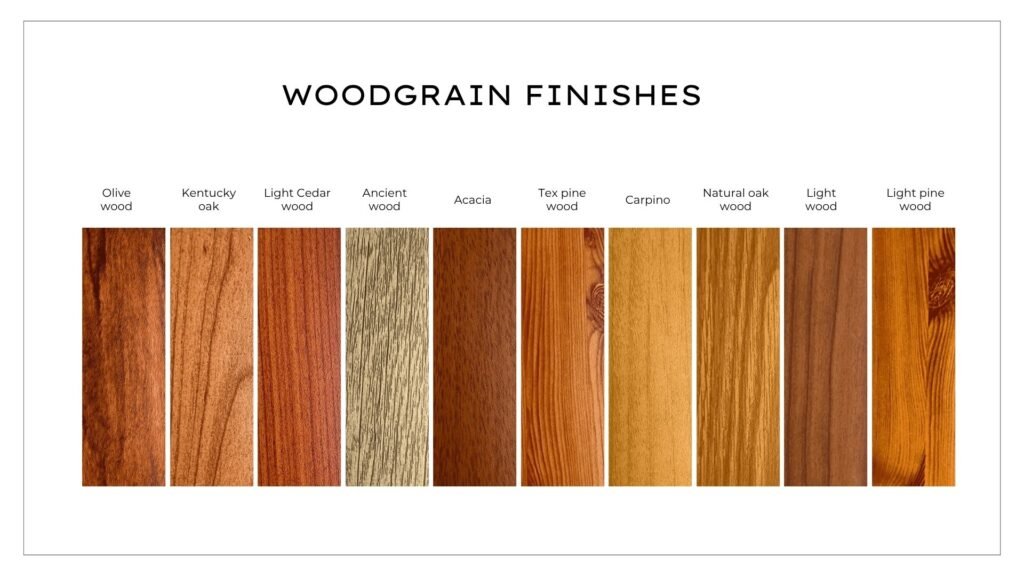
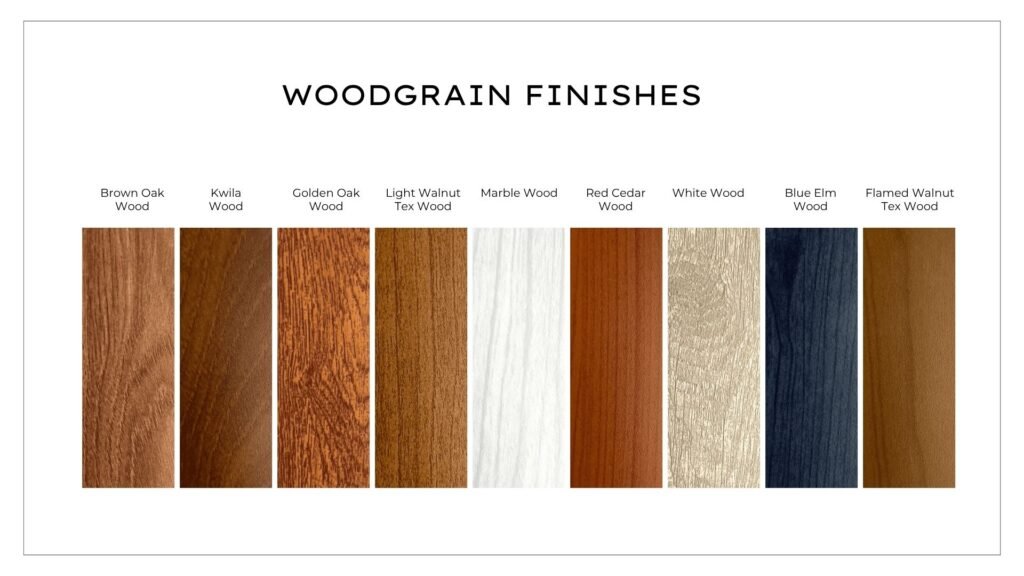
The aim is not to pretend the surface is natural timber at every distance. It is to decide whether the colour, grain and architectural lines produce the warmth you want on the actual building.
Benefits and Trade-Offs of Wood-Look Aluminum Siding
Less routine refinishing
Factory-finished wood-look aluminum is intended to retain its decorative surface without the recurring staining routine associated with maintaining many natural wood finishes. It still needs cleaning and inspection.
Wood has a different appeal: it can often be stained or repainted as preferences change. Leaving suitable wood unfinished is also a design choice, although its colour and surface will weather. The USDA Forest Products Laboratory’s guidance on wood finishes explains how finishing choices affect appearance and protection.
No moisture absorption in the aluminum itself
Aluminum does not absorb water as wood does. This avoids wood-specific problems such as moisture-driven swelling and decay in the siding material. The USDA identifies excessive moisture and moisture fluctuations as causes of checking, warping and, in severe cases, rot in wood siding. USDA guidance on exterior wood siding.
That advantage does not make a completed wall waterproof. Water management behind the cladding remains essential.
Controlled profiles and architectural lines
Manufactured profiles make it possible to plan a repeating pattern of grooves and shadow lines. This can suit contemporary homes, additions and mixed-material facades where board layout is part of the design.
In the VEDREX system, the extruded V-groove profile creates the visible line between planks. Coordinated corners, J-trim, starter components and two-piece F- and H-trims help carry that detailing around openings and terminations. Other manufacturers may use different components, so compare complete systems rather than looking only at the face of a plank.
Greater thickness does not mean dent-proof
Profile geometry and metal thickness affect rigidity, which is why the VEDREX 1.6 mm specification is relevant when comparing it with thin-sheet siding. However, no aluminum siding should be assumed to be dent-proof. Impact, support spacing, installation and the exact profile all affect the result.
Metal can also be scratched. Finish damage may be more noticeable when it interrupts a woodgrain pattern. Ask how damaged planks can be replaced, whether matching material can be ordered later and what touch-up methods are permitted.
Wood Grain Aluminum Siding vs Real Wood
The right choice depends on the appearance you want and the maintenance you are willing to undertake.
| Factor | Wood grain aluminum | Natural wood |
| Appearance | Manufactured grain and colour | Natural grain, knots and variation |
| Routine care | Cleaning and inspection | Cleaning; refinishing depends on the desired look |
| Moisture | Aluminum does not absorb water | Wood exchanges moisture with its surroundings |
| Colour changes | Factory finish is the starting point | Staining or painting offers more flexibility |
| Surface repairs | Follow finish-specific repair guidance | Sanding or refinishing may be possible |
| Design character | Repeating profiles and controlled joints | Individual boards and natural variation |
| Cost comparison | Price the complete cladding system | Species, grade and finishing affect price |
Choose natural wood if authentic texture and the ability to change the finish over time are central to your design. Consider wood-look aluminum if your priority is a wood-inspired exterior with less recurring refinishing.
For someone considering VEDREX specifically, the decision is not simply “aluminum versus wood.” It is whether the combination of an extruded profile, coordinated trims and a factory woodgrain finish justifies the installed cost for the project.
How Does It Compare with Wood-Look Vinyl Siding?
Vinyl uses a plastic substrate, while aluminum uses metal. Both categories include wood-inspired appearances, but profile shape, texture, joints and finish quality vary substantially between products.
An extruded aluminum profile can create a more defined architectural edge than a flexible vinyl panel. VEDREX also uses coordinated extruded components around the siding. Still, compare actual samples: the word “aluminum” alone does not tell you how rigid, convincing or well detailed a product will be.
Both materials move with temperature changes, so installers must follow the product’s fastening and clearance requirements. The Polymeric Exterior Products Association’s installation guidance specifically addresses movement allowances for vinyl siding.
Standard vinyl is generally the lower-upfront-cost option compared with premium extruded aluminum. Obtain installed quotes before judging the difference. For a broader comparison, see our aluminum siding vs vinyl siding guide.
Styles, Profiles and Woodgrain Colours
Horizontal or vertical siding
Horizontal boards can emphasize the length of a facade and connect visually with rooflines or window bands. Vertical boards can draw attention to an entrance or the height of a gable. See how vertical wood grain aluminum siding can be used across entrances, gables, full façades and accent walls.
Confirm that the selected system supports the intended orientation. VEDREX’s installation documentation includes horizontal and vertical applications, with our own component sequences. See the aluminum siding installation guide when planning the layout with your installer.
Vertical V-groove siding creates a different appearance from traditional board-and-batten construction. Choose from drawings or a mock-up when a particular joint pattern matters.
Narrow or wide profiles
VEDREX’s current aluminum siding profile range includes 2.5-inch, 4-inch and 6-inch V-groove profiles, plus a 6-inch corrugated profile. Confirm the profile, finish combination and available lengths before ordering.
For an entrance accent, a narrower profile can add detail. On a larger wall, a wider profile may create a calmer pattern. Ask your installer to show where plank ends and trims will fall around openings.
A woodgrain finish can also be combined with corrugated aluminum siding, adding a rounded, ribbed texture around entrances, gables and other architectural features.
Light, warm and dark wood tones
VEDREX’s woodgrain finishes include Light Cedar Wood, Red Cedar Wood, Natural Oak Wood, Brown Oak Wood, Kwila Wood and Flamed Walnut Tex Wood. These are finish names; the siding remains aluminum.
As a design starting point, compare lighter tones with pale masonry, warmer browns with brick and deeper tones with light stucco. Let the existing exterior materials guide the shortlist.
Where Can Wood Grain Aluminum Siding Be Used?
Wood-look cladding can be considered for an entire exterior or a focused feature area:
- An entrance framed by brick or stone.
- A gable above a lighter main facade.
- An addition that needs a relationship with the original house.
- A recessed wall that benefits from a warmer colour.
- A commercial entrance or storefront accent.
A limited application is worth pricing if you want the appearance in the most visible areas without using the same material everywhere. Our residential aluminum siding guide explores wider home-exterior considerations.
Woodgrain aluminum can work particularly well on garages because large, simple wall surfaces provide enough area for the finish to become a significant architectural feature. It can be used across the full garage exterior or paired with dark aluminum soffit, trim or other materials for contrast. See more [woodgrain aluminum garage siding ideas] in our dedicated garage guide.
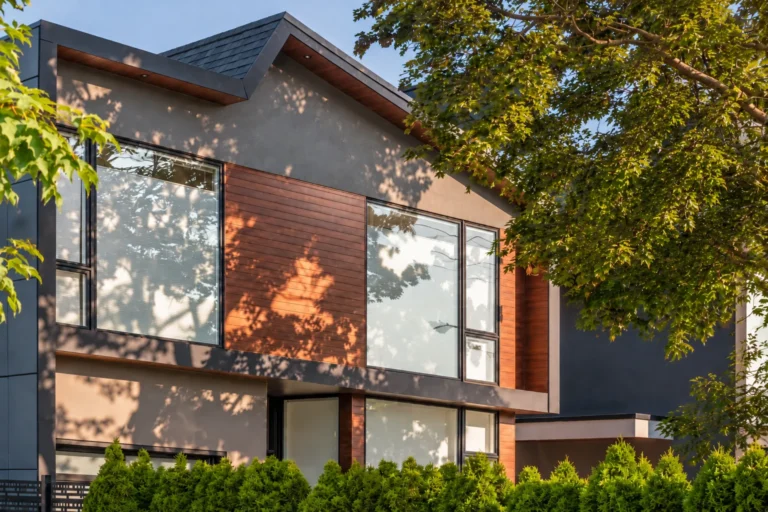
For a real example, VEDREX’s East York Presence project uses a Kwila finish across 4-inch siding and soffit on a Toronto home. It illustrates how repeating the same wood tone can visually connect walls and roof overhangs.
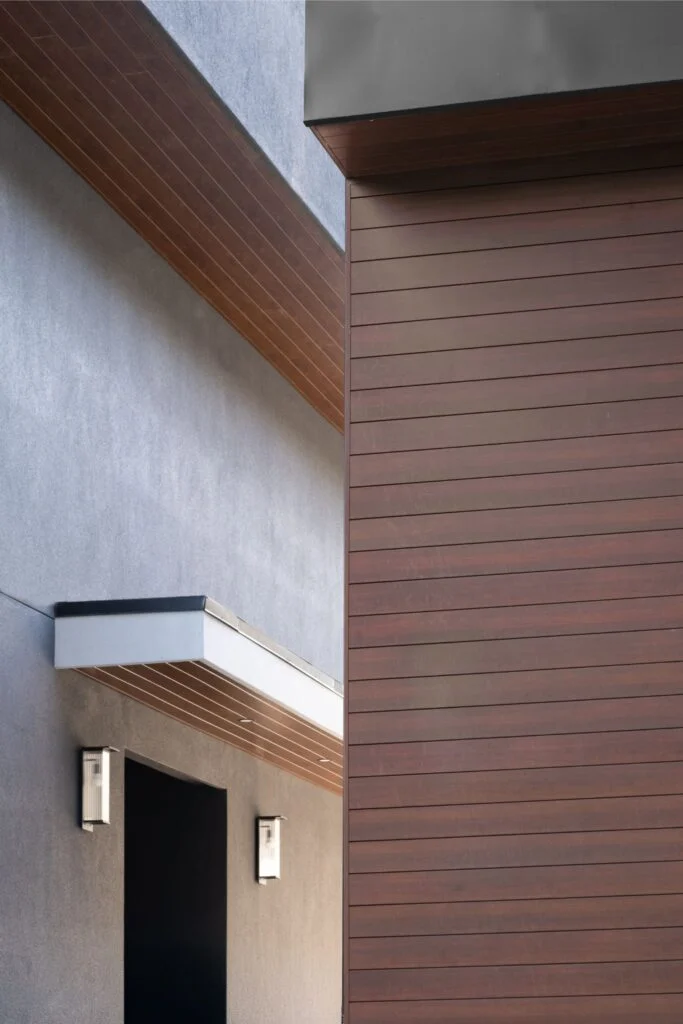
If you want matching soffits, confirm the appropriate soffit product and ventilation details separately.
Is Wood Grain Aluminum Siding Suitable for Canadian Weather?
It can be suitable when the selected product and wall assembly are appropriate for the location. Canadian projects need to account for rain, snow, freeze-thaw conditions, summer sun and temperature changes throughout the year.
The siding is one part of that assembly. The National Research Council’s rainscreen guidance describes a first line of defence that limits rain entry and a second that manages water getting past the exterior surface.
Discuss these details with your contractor:
- The drainage path behind the siding.
- Flashing at windows, doors and material transitions.
- The supporting wall and attachment system.
- Allowances for expansion and contraction.
- Site exposure, including wind and salt where relevant.
VEDREX describes its system as rainscreen-compatible and supplies specialized clips that create space behind the profiles while accommodating movement. Those components still need to be installed as documented and integrated with the rest of the wall assembly. Review the VEDREX Installation and Maintenance Guide.
Aluminum’s resistance to moisture absorption does not eliminate the need for drainage and flashing.
Maintenance, Fading and Service Life
How do you clean woodgrain aluminum?
Follow the instructions for the specific finish. VEDREX’s current guide recommends a soft brush, water from a garden hose and, if needed, a mild detergent with a pH of 6–7. It advises against high-pressure washers, stiff brushes and abrasive cleaners. VEDREX Installation and Maintenance Guide.
Make cleaning and inspection part of your exterior-care routine. Pay attention to sheltered areas where dirt remains and to damage around frequently used entrances.
Does wood grain aluminum siding fade?
Colour change is possible. The finish, sun exposure and environment all matter. “Fade-resistant” should not be interpreted as a promise that the colour will never change.
Coating performance is more useful than a general durability claim. FGIA publishes different performance specifications for architectural aluminum coatings. Ask which documented requirements apply to the exact woodgrain finish being considered; a claim about another coating or a solid colour does not establish its performance. FGIA architectural coatings specifications.
The factory-applied finish also provides an additional barrier between the aluminum substrate and the surrounding environment. Learn how coatings and the underlying alloy work together in our guide to aluminum siding corrosion resistance
How long does it last?
There is no single service-life figure that applies to every wood-look aluminum product. The metal profile, decorative finish, installation and surrounding wall details can age differently.
Request the written warranty and check what it covers: material defects, finish adhesion, colour change, labour or replacement material. A warranty period describes specified coverage; it is not a promise that the entire exterior will look unchanged for that period or fail when it ends.
How Much Does Wood Grain Aluminum Siding Cost?
For a Canadian project, ask for pricing in Canadian dollars and distinguish material-only pricing from a complete installed price. A price per square foot is useful only when you know what it includes.
Request a quote covering:
- The selected profile, woodgrain finish and material quantity.
- Corners, starter components, trims, clips and fasteners.
- Cutting waste and plank-length requirements.
- Delivery, installation labour and access equipment.
- Removal and disposal of existing siding, if required.
- Wall repairs, preparation and necessary drainage or flashing work.
Check whether taxes are included. A small accent with several windows can involve more cutting and trim per square foot than a large uninterrupted wall.
No single figure can represent all those conditions. For a VEDREX quote, submit the location, approximate wall area, photographs or drawings, preferred finish and installation direction through the contact page. This makes the comparison with other systems more meaningful because the same project scope can be evaluated.
When comparing wood and aluminum, also consider future access. Refinishing an upper-storey feature may involve more labour and equipment than maintaining a ground-level wall. Price likely tasks instead of assuming a guaranteed maintenance saving.
Is Wood Grain Aluminum Siding Worth It?
It deserves a place on your shortlist if you want a wood-inspired exterior, prefer less routine refinishing and value defined profiles and coordinated detailing.
Natural timber may suit you better if genuine grain and texture are essential, or if you want to change stains over time. If the lowest initial price is the priority, compare simpler siding systems before deciding.
Woodgrain finishes are one example of how contemporary aluminum has developed beyond the painted roll-formed siding common in the mid-twentieth century. Our history of aluminum siding explains how the product evolved into today’s architectural systems.
VEDREX is most relevant when the buyer values the extruded profile itself—not only the woodgrain pattern. Its 1.6 mm 4-inch and 6-inch V-groove profiles, concealed fastening approach and coordinated trims distinguish it from many thin-sheet products, but the final decision should still be based on samples, project details and installed quotes.
The most useful comparison is between complete proposals: the appearance, construction, installation scope, care requirements and price you will actually receive.
Planning a project in Ontario or elsewhere in Canada? View the VEDREX siding system, compare woodgrain finishes, and contact VEDREX for samples or project-specific pricing.
Frequently Asked Questions
Is wood grain aluminum siding real wood?
No. It is aluminum with a manufactured finish that resembles wood grain and colour. It does not have the natural variation or texture of a timber board.
Is all aluminum siding constructed the same way?
No. Some products are formed from thin aluminum sheet, while others use extruded profiles. VEDREX uses extruded aluminum; its published 4-inch and 6-inch V-groove profiles have a 1.6 mm wall thickness.
Does it need staining?
Routine staining is not part of normal care for a factory woodgrain finish. Follow the manufacturer’s cleaning and repair instructions and obtain approval before applying another coating.
Is it more expensive than vinyl?
Premium extruded aluminum generally costs more upfront than standard vinyl. Compare installed quotes for the actual project, including trims, preparation and labour.
Can it be installed vertically?
Yes, when the selected system permits it. VEDREX documents vertical installations; installers should follow its fastening, movement and drainage details.
Can aluminum siding look like cedar?
Yes. Cedar-inspired finishes reproduce cedar-like colours and grain. VEDREX lists Light Cedar Wood and Red Cedar Wood finishes, although these do not turn a plank profile into a cedar-shake profile.
Does woodgrain aluminum fade?
It can change colour with exposure. Ask for finish-specific performance information and warranty terms, and review physical samples before ordering.
Is it suitable for Canadian winters?
It can be, provided the product, installation and wall assembly suit the location. Drainage and thermal-movement details remain important through seasonal changes.