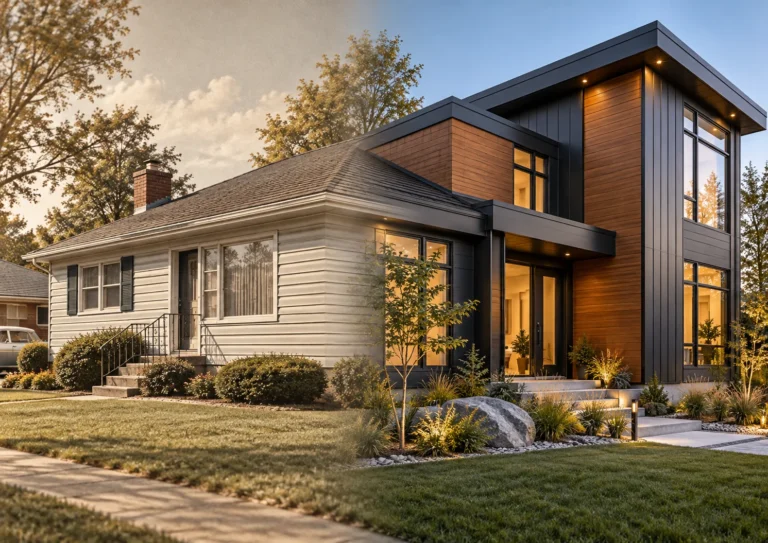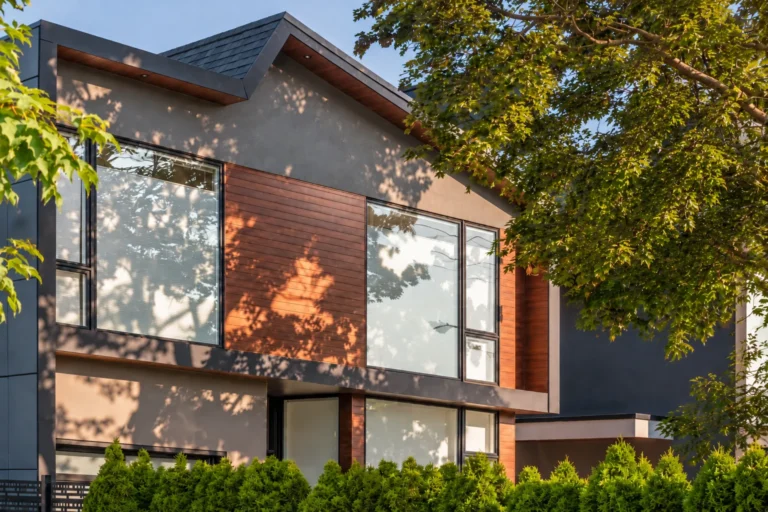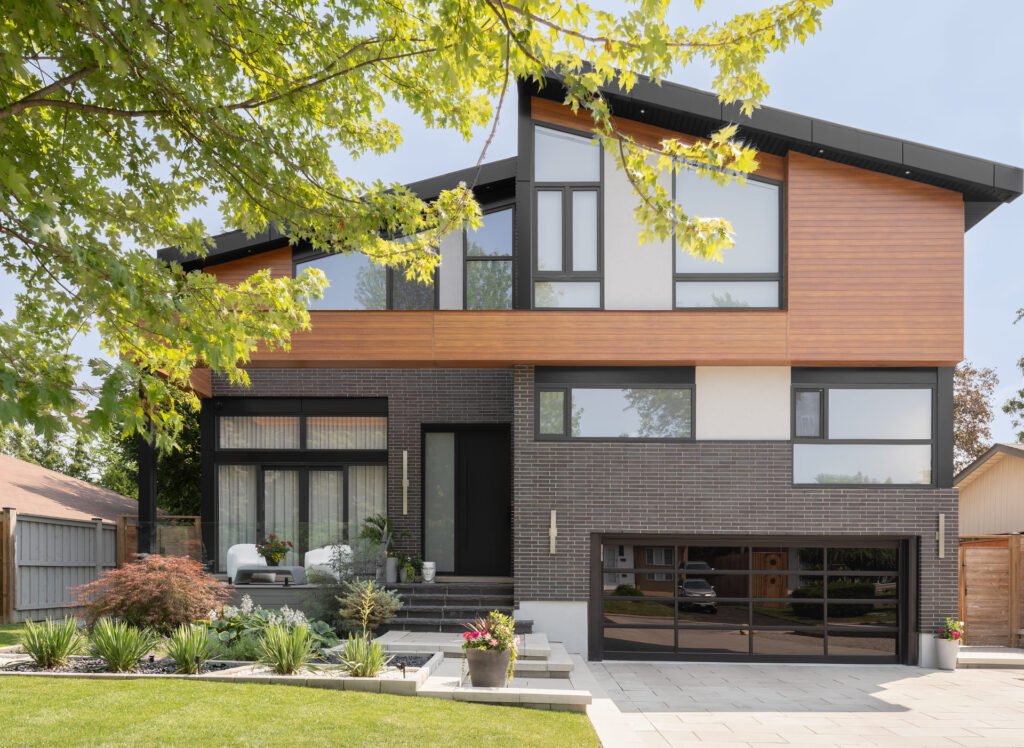
When it comes to upgrading a home’s exterior in the Greater Toronto Area (GTA) and across Canada, homeowners and builders face a demanding dual challenge. The exterior envelope must project a striking, modern luxury aesthetic while simultaneously enduring some of the harshest weather conditions on the planet, from deep sub-zero winter freezes to intense summer humidity. While traditional cladding options like wood, vinyl, and fiber cement have long been standard choices, architectural trends are shifting rapidly. Today, aluminum siding for residential buildings has emerged as the premier choice for modern, high-performance home design.
As a dedicated Canadian manufacturer, VEDREX engineers premium cladding systems designed specifically to conquer the Canadian climate while delivering unparalleled architectural freedom. Here is an in-depth look at what makes residential aluminum siding an indispensable investment for your next exterior renewal.
Extruded Aluminum vs. Traditional Metal Siding: What is the Difference?
To truly appreciate the value of high-end aluminum siding for residential buildings, it is essential to understand the difference between standard roll-formed metal siding and VEDREX’s architectural-grade systems.
| Feature | Standard Roll-Formed Metal Siding | VEDREX Architectural-Grade Extruded Aluminum Siding |
|---|---|---|
| Manufacturing Process | Roll-formed (thin, flat sheets stamped through rollers) | Extruded (solid alloy heated & forced through a precision die) |
| Material Grade | Thin, unspecified aluminum or steel | 6063-T6 architectural-grade aluminum alloy |
| Thickness / Rigidity | Exceptionally thin; lacks structural rigidity | Heavy-duty 1.6 mm thick profile |
| Oil-Canning (Rippling) | Prone to visible rippling from thermal expansion | Completely eliminated |
| Impact Resistance | Low – easily dents from hail, sports balls, or leaned ladders | High – structural impact resistance |
| Aesthetic Line Quality | Can warp or wave over time | Perfectly crisp, laser-straight geometric lines |
| Available Widths | (Not specified) | Refined 4-inch and 6-inch V-Groove boards |
| Best Suited For | Basic, budget-conscious applications | Contemporary Canadian architecture & premium residential builds |
Traditional metal siding is manufactured by feeding thin, flat sheets of aluminum or steel through rollers to stamp out a shape. Because the material is exceptionally thin, it lacks structural rigidity. Over time, fluctuating temperatures cause thermal expansion, leading to a visible rippling effect known in building science as oil-canning. Furthermore, traditional thin siding easily dents from minor impacts like hail, stray sports balls, or an accidentally leaned ladder.
VEDREX specializes strictly in extruded aluminum siding. In this advanced manufacturing process, solid 6063-T6 architectural-grade aluminum alloy is heated and forced through a precision die. The result is a heavy-duty profile boasting a 1.6 mm thickness, far superior to economic roll-formed alternatives. This robust engineering completely eliminates oil-canning and provides structural impact resistance. Available in refined 4-inch and 6-inch widths, our engineered V-Groove aluminum siding boards provide the perfectly crisp, laser-straight geometric lines demanded by contemporary Canadian architecture.
The difference between roll-formed and extruded aluminum is the result of decades of changes in manufacturing and architecture. Our guide to modern aluminum siding traces that evolution from postwar residential siding to today’s architectural extrusions.
Garages, for example, are one residential application where material rigidity can be especially important. Because garage walls are typically at ground level, they are more exposed to bicycles, bins, tools, ladders and other everyday impacts than many other areas of a home. Extruded aluminum can also be continued onto soffits and exterior ceiling surfaces to create a coordinated design. See our guide to [aluminum siding for garage walls, soffits and ceilings] for design ideas and practical considerations.
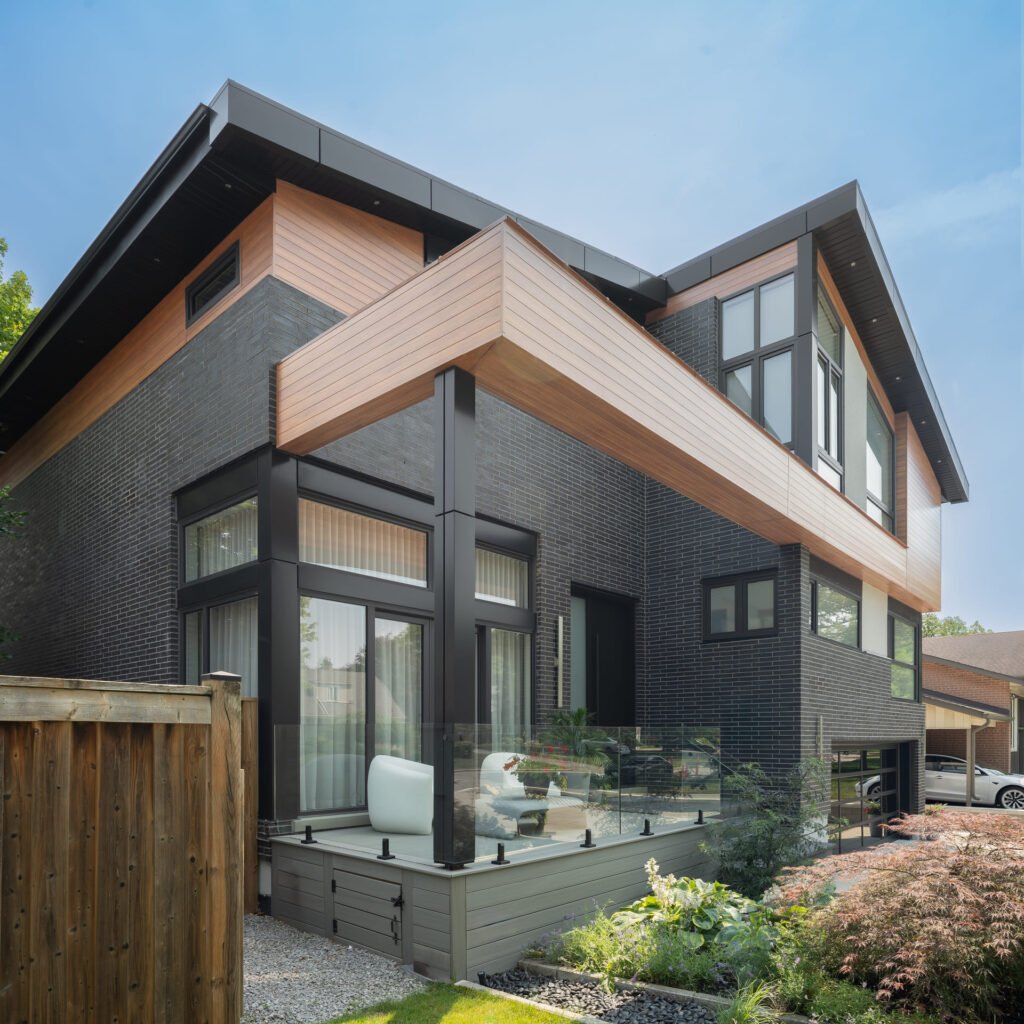
Why Vedrex’s Aluminum Siding is Engineered for the GTA and Canadian Climates
The building envelope of a home in Ontario must withstand extreme freeze-thaw cycles. Materials that absorb moisture will eventually fail. VEDREX systems deliver unmatched durability because they are fundamentally built around cold-climate building science.
- Freeze-Thaw Imperviousness: Unlike wood or fiber cement, aluminum is completely non-porous. It does not absorb moisture, eliminating the risks of rot, fungal decay, and internal splitting when the temperature plummets.
- Thermal Expansion Management: Metal naturally expands and contracts with shifting seasons. Cheap siding systems buckle when they expand. VEDREX profiles are engineered alongside precision trim transitions, including J-trims and Corner Trims, that seamlessly accommodate thermal movement, keeping your walls structurally flawless year-round.
- Integrated Rainscreen and Ventilation: Modern residential building envelopes require proper moisture management. VEDREX features advanced, hidden fastener rainscreen technology that serves as a protective moisture barrier. By mathematically alternating VEDREX Vented Soffit planks with Non-Vented planks, architects and builders easily hit rigid performance targets based on foundational research from the National Research Council of Canada, protecting the home from trapped humidity.
- Non-Combustible Construction: Safety is paramount. Unlike wood or polyvinyl chloride (PVC/vinyl), extruded aluminum is entirely non-combustible. It meets severe fire safety regulations outlined by the National Building Code of Canada, offering critical protection for high-density urban residential centers in the GTA.
High Lifetime ROI and Property Value Impact
While the upfront material cost of premium extruded aluminum siding is higher than economy vinyl or standard timber, it represents one of the highest lifetime Returns on Investment (ROI) in modern home renovation. Real wood requires rigorous maintenance, demanding restaining or repainting every few years to fight off moisture damage, costing thousands of dollars in recurring labor. Vinyl siding, while low-cost initially, degrades under intense UV exposure and becomes brittle in deep Canadian freezes, leading to cracking and eventual full replacement.
In contrast, VEDREX extruded aluminum siding boasts a service life of 40 to 50+ years. Post-installation maintenance is virtually non-existent: a simple annual wash with warm water and mild detergent is all that is required to preserve your finish. By eliminating recurring labor and repair expenses, VEDREX pays for itself over its lifespan, significantly boosting your home’s overall equity, curb appeal, and resale property value.
Designing with Residential Aluminum Siding: Material and Color Combinations
Modern residential architecture relies heavily on depth, texture, and visual contrast. Instead of wrapping an entire home in a single material, top architects and designers combine premium aluminum profiles with traditional organic building elements to create breathtaking aesthetics.
Premium Material Pairings
- Aluminum and Brick: Upgrading a classic GTA brick bungalow or two-story home by integrating vertical or horizontal residential aluminum siding sections breaks up monotony and adds instant contemporary luxury.
- Aluminum and Natural Stone: Combining a rugged, heavy limestone or granite base layer with the sleek, lightweight geometric lines of VEDREX upper peaks creates a beautifully balanced, high-contrast transitional aesthetic.
- Architectural Accent Walls: Utilizing high-end finishes exclusively on entryways, porticos, modern overhangs, or ceiling soffits establishes a dramatic visual focal point that elevates immediate curb appeal.
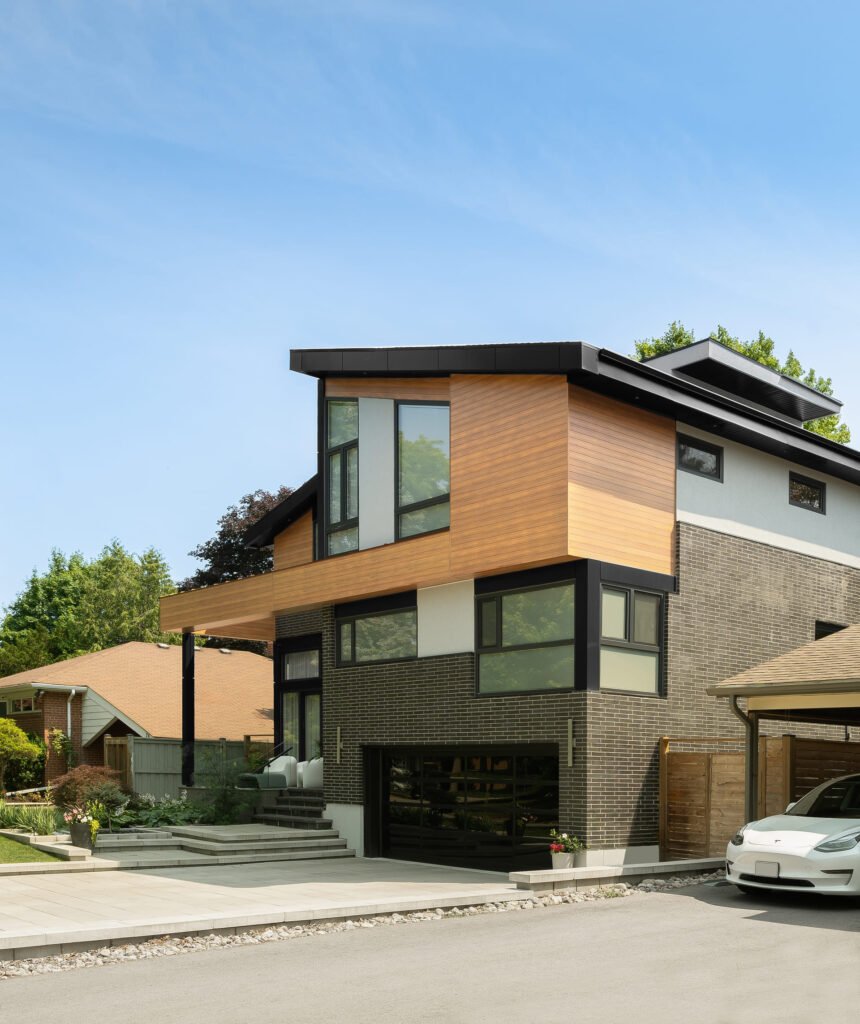
Curating Your Style: Residential Aluminum Siding Colors and Finishes
Your choice of residential aluminum siding colors completely dictates the architectural narrative of your home. VEDREX offers an expansive range of surface finishes engineered via advanced powder coating and innovative sublimation technology to achieve long-lasting UV resistance.
| Finish Category | Best Used For… | VEDREX Color Examples |
|---|---|---|
| Premium Solid Colors | Ultra-modern, minimalist, industrial, or Scandinavian-inspired designs that demand clean, striking architectural lines. | Charcoal, Black, Modern Whites, and Contemporary Grays. |
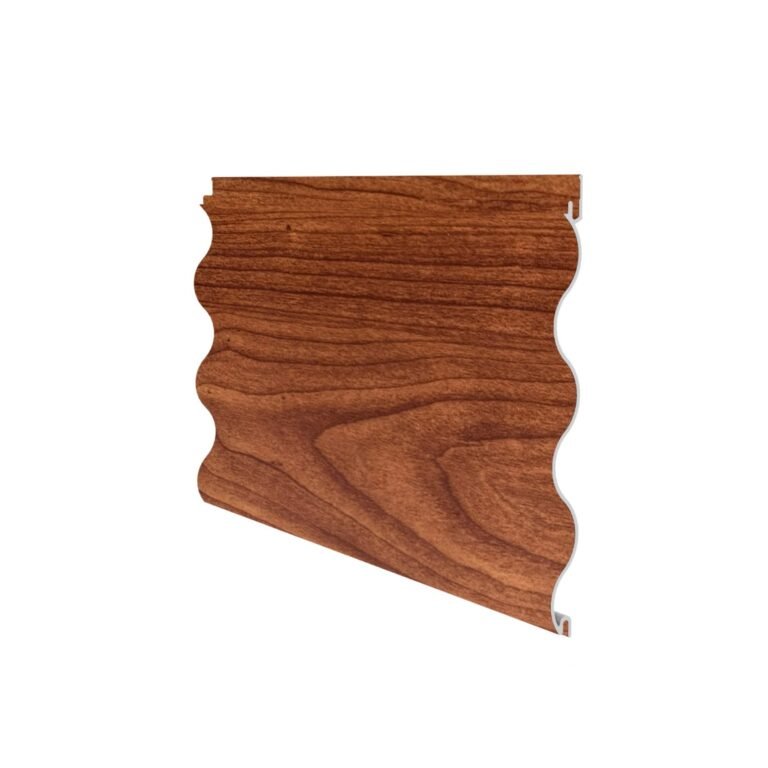
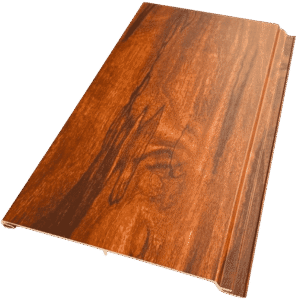
| Light and Bright Woodgrains | Biophilic design, fresh, minimalist outdoor living zones, modern ceiling soffits, or airy modern accents. | Marble Wood, White Wood, Carpino. |
| Warm and Classic Woodgrains | Rich, heritage-inspired organic textures that beautifully balance cold stone or dark concrete facades. | Kentucky Oak, Light Cedar, Brown Oak. |
| Deep and Bold Woodgrains | Dramatic, luxury finishes engineered to stand out on high-visibility facade segments, grand entryways, and features. | Kwila Wood, Olive Wood, Light Walnut Tex, Red Cedar. |
Read More: Wood Grain Aluminum Siding
The Homeowner’s Guide to the Exterior Renewal Process
Embarking on an exterior home renovation can feel overwhelming. Understanding the systematic process ensures your project runs smoothly, safely, and remains on budget.
Step 1: Initial Property Assessment & Scope Definition
Before any design decisions are made, a qualified exterior contractor or building envelope specialist evaluates your home’s current cladding condition. This includes:
- Identifying existing moisture damage, rot, or failing flashing.
- Measuring substrate flatness to ensure extruded aluminum’s tight tolerances can be met.
- Determining whether a full tear‑off or an overlay installation is structurally appropriate.
- Checking local building codes for rainscreen requirements.
At this stage, you also define the project scope: full house cladding, single façade renovation, or a targeted accent wall.
Step 2: Contractor Selection & Technical Specification
Because VEDREX manufactures architectural‑grade extruded aluminum (not roll‑formed siding), you will work with a licensed siding contractor who has experience in rigid, high‑tolerance profiles.
Your contractor will:
- Provide a material takeoff based on actual field measurements.
- Specify required accessories (starter strips, corner extrusions, J‑channels, hidden fasteners).
- Confirm compatibility with your chosen rainscreen drainage mat and weather‑resistive barrier (WRB).
- Order custom‑cut lengths from VEDREX’s factory to minimize field cutting.
Important: Do not rely on general carpenters. Extruded aluminum requires precise expansion gaps (typically 1/8″ per 20 linear feet) and specific blade types for clean cuts.
Read more: How to Spot a Good Aluminum Siding Contractor in the GTA
Step 3: Surface Preparation & Substrate Correction
Once the contractor is secured, preparation begins:
- Removal of old siding (if a full tear‑off).
- Repair or replacement of damaged sheathing.
- Installation of a continuous WRB (e.g., house wrap or liquid‑applied membrane).
- Attachment of vertical furring strips or a rainscreen mat (minimum 3/8″ gap) to create a drainage and ventilation cavity behind the aluminum.
This cavity is critical: it stops capillary action, allows moisture to drain, and reduces thermal bridging — preventing the very conditions that cause hidden rot behind traditional siding.
Step 4: Material Delivery & On‑Site Quality Check
VEDREX ships your extruded 6063‑T6 aluminum boards in protective packaging. Upon delivery, your contractor should:
- Verify profiles (4″ or 6″ V‑Groove) and sublimated color/woodgrain finishes.
- Check for any shipping damage (bent ends, scratched faces).
- Acclimate materials on‑site for 24–48 hours if temperature differs significantly from storage conditions — although aluminum’s low thermal mass minimizes movement, responsible installers still allow stabilization.
Step 5: Precision Installation of Extruded Aluminum Boards
Installation follows a strict sequence:
- Starter strip – Leveled at the lowest point to ensure a perfectly straight first course.
- Horizontal or vertical layout – Pre‑determined by the architectural drawings. VEDREX’s rigid 1.6 mm thickness allows longer uninterrupted spans than roll‑formed siding without oil‑canning.
- Fastening – Hidden clips or color‑matched face screws driven into furring strips (not tight against the nail slot; a 1/32″ gap allows controlled thermal movement).
- Board engagement – Each course interlocks with the one below it. No caulking is applied to horizontal laps, as the engineered overlap is designed to shed water while permitting drainage.
- Trim out openings – Windows, doors, and corners receive custom‑extruded trim (not field‑bent coil stock) for a consistent, sharp edge.
The result: laser‑straight lines that remain stable across seasonal temperature swings, unlike thin roll‑formed siding, which inevitably ripples.
Our guide to vertical aluminum siding for homes looks at how orientation changes the proportions and appearance of a façade.
Step 6: Final Inspection & Maintenance Briefing
After installation:
- Your contractor performs a water test on a sample seam to verify drainage behavior.
- All cut edges (if any) are touched up with VEDREX’s factory‑matched trims to prevent edge corrosion.
- You receive a maintenance guide: extruded aluminum requires no painting or sealing; periodic washing with mild detergent is sufficient.
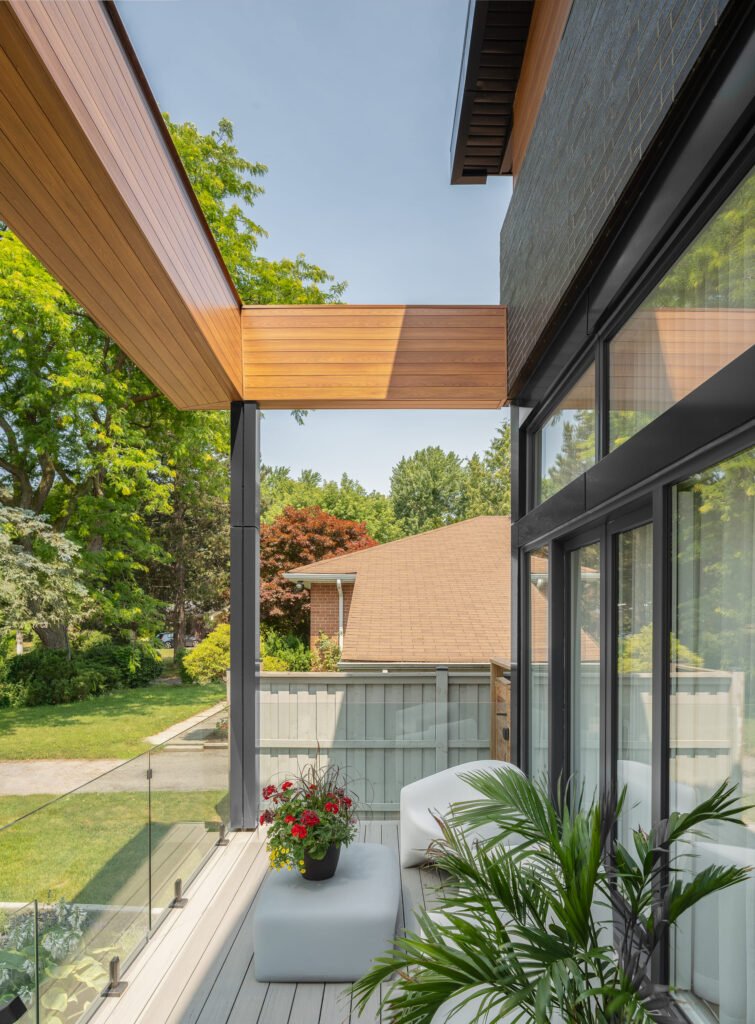
Understanding Aluminum Siding Project Costs and Budgeting for Residential Buildings Exterior Renovations
When budgeting for an exterior renovation, the overall financial structure depends on several variable factors. Knowing how these costs behave allows you to make strategic adjustments without sacrificing quality.
Key Factors Driving Project Costs
Total Square Footage and Architectural Complexity
Multistory homes, complex roof pitches, and wrapping around intricate structural corners require more materials and precision labor than a straightforward, single-story rectangular wall. Every corner, dormer, and cutout adds measurable time to the installation.
Existing Demolition and Wall Preparation
Before mounting new cladding, installers must remove and safely dispose of old vinyl, stucco, or deteriorated wood. This is followed by a thorough inspection of the underlying substrate, repairs to any damaged sheathing, and the installation of proper furring layers and a weather-resistive barrier.
Rainscreen Cavity (Mandatory, Not Optional)
Unlike cheap roll-formed siding that is often attached directly to sheathing, architectural-grade extruded aluminum requires a dedicated drainage and ventilation cavity behind the boards. This adds furring strips or a rainscreen mat to the assembly, a non-negotiable step that prevents moisture entrapment and substrate rot.
Labor Complexity
Premium extruded 1.6 mm profiles require precision cutting, level alignment, and meticulous engagement of the interlocking systems. This commands skilled trade labor from contractors specifically experienced with rigid, high-tolerance aluminum — not general carpenters or vinyl siding crews.
Smart Ways to Manage Your Project Budget
Simplify Your Home’s Geometry
During the planning phase, consider reducing the number of inside and outside corners, standardizing window and door trim details, and avoiding overly complex patterns (such as diagonal or herringbone layouts). Every simplification reduces installation time and material waste without affecting product performance.
Bundle with Other Exterior Work
If your project also includes new windows, roofing, or insulation, coordinate your siding installation with those trades. Shared scaffolding, single contractor mobilization fees, and consolidated waste disposal reduce per-trade overhead.
Off-Season Scheduling
In climates with harsh winters, professional siding contractors may offer more flexible scheduling for early spring or late fall installations when overall demand is lower. (Avoid installation when temperatures consistently fall below 40°F/4°C, as sealants may not cure properly.)
The Long-Term Lifetime Asset View
Choosing cheap, low-grade vinyl or thin roll-formed options may appear to save money on day one. However, those materials guarantee cosmetic deterioration (oil-canning, dents, fading, cracking) and full replacement within 10 to 20 years. They also require ongoing maintenance such as painting, dent repair, and panel replacement after storms.
Investing in architectural-grade extruded aluminum siding is fundamentally different. Its 1.6 mm solid 6063-T6 profile eliminates oil-canning permanently. It resists impact damage from hail, sports balls, and accidental ladder leans. It never requires painting or sealing. And its expected service life typically exceeds 40 years, often lasting the lifetime of the building itself.
From a lifecycle perspective, paying once for a permanent cladding solution protects your wallet from future material inflation, labor cost increases, and the repeated expense of tear-offs and reinstallations. The cheapest siding is not the one with the lowest upfront cost; it is the one you only buy once.
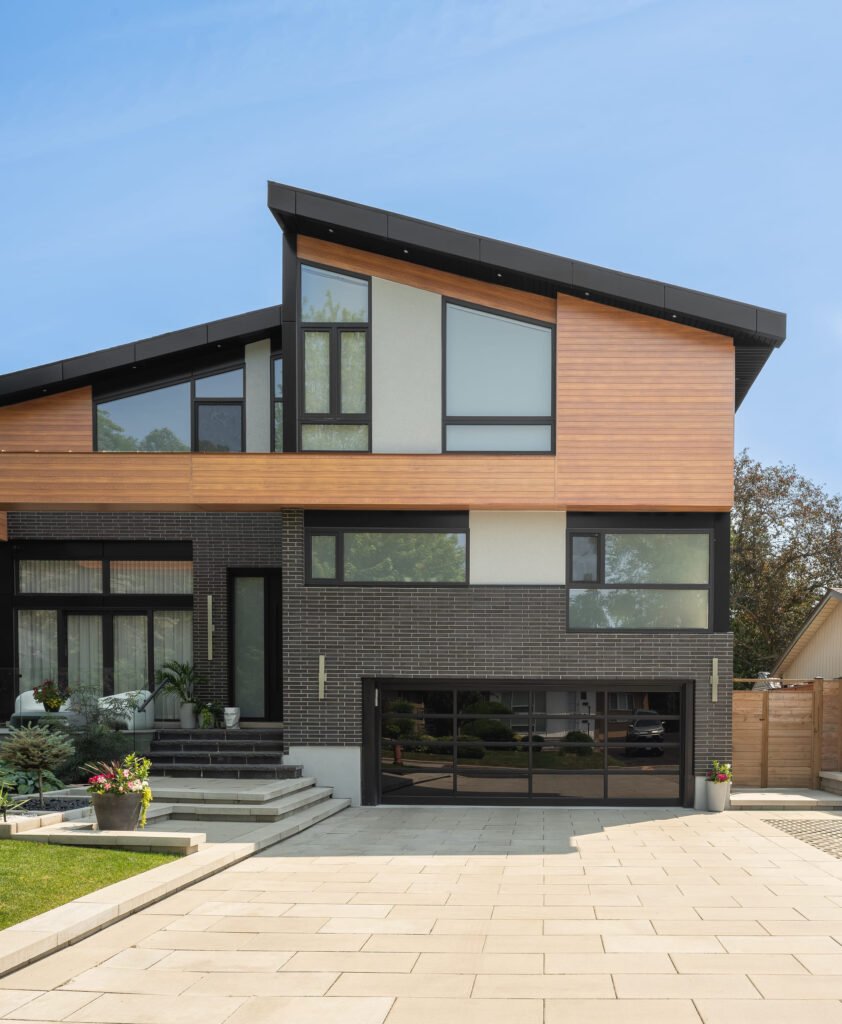
Aluminum Siding Maintenance: The “Set It and Forget It” Exterior
When choosing siding, the upfront cost is only half the story. The real kicker is the long-term upkeep, the weekend-devouring chores, and recurring expenses that pop up year after year.
If you are installing premium aluminum siding, the ongoing maintenance requirement is incredibly simple: virtually none.
To understand why this is such a game-changer, look at how it holds up against the most common siding alternatives:
- The Wood Trap: Wood siding demands a relentless cycle of scraping, repainting, or restaining every few years just to keep rot and pests at bay.
- The Vinyl Vulnerability: While affordable, vinyl degrades under constant UV exposure and becomes brittle when the temperature drops, making it prone to cracking.
- The “Thin-Gauge” Aluminum Flaw: Traditional, thin-framed aluminum siding requires delicate care. Because the metal is thin, it is highly susceptible to denting, forcing homeowners into tedious cosmetic repairs.
- The VEDREX Advantage: Unlike that thin-framed metal, VEDREX uses heavy-duty, extruded aluminum. This structural thickness eliminates the worry of easy denting while entirely cutting out recurring labor and material costs. It doesn’t require painting, it doesn’t need sealing, and it won’t crack in the cold or buckle under impact.
Your Only Maintenance Checklist
Keeping your exterior looking brand new doesn’t require a professional crew or a hefty budget. All it takes is an occasional cleaning to remove baseline dust and environmental buildup:
- Mix: A bucket of water and a mild detergent.
- Wash: A gentle spray down or a soft-bristle brush scrub.
- Rinse: A quick rinse with a standard garden hose.
That is it. By swapping intensive labor for a quick seasonal rinse, you save thousands in paint and contractors over the lifespan of your home, giving you a premium exterior that truly looks after itself.
Low maintenance does not mean that environmental exposure should be ignored. Road salt, trapped moisture, and damaged coatings can affect any exterior metal system, so it is useful to understand aluminum corrosion and oxidation and how to minimize it.
Transform Your Home with VEDREX Canadian-Engineered Excellence
Upgrading to premium extruded aluminum siding is far more than a simple aesthetic facelift; it is an investment in absolute structural durability, fire safety, and long-term peace of mind. By choosing a Canadian-manufactured system engineered for our specific climate, you ensure your home remains stunningly protected for decades to come.
Ready to elevate your home’s exterior envelope? Contact the team at VEDREX Toronto Aluminum Siding to evaluate your residential project requirements, request physical material samples, explore our full color and sublimated woodgrain charts, and receive a free quote on your custom manufacturing order. Let’s bring your architectural vision to life.