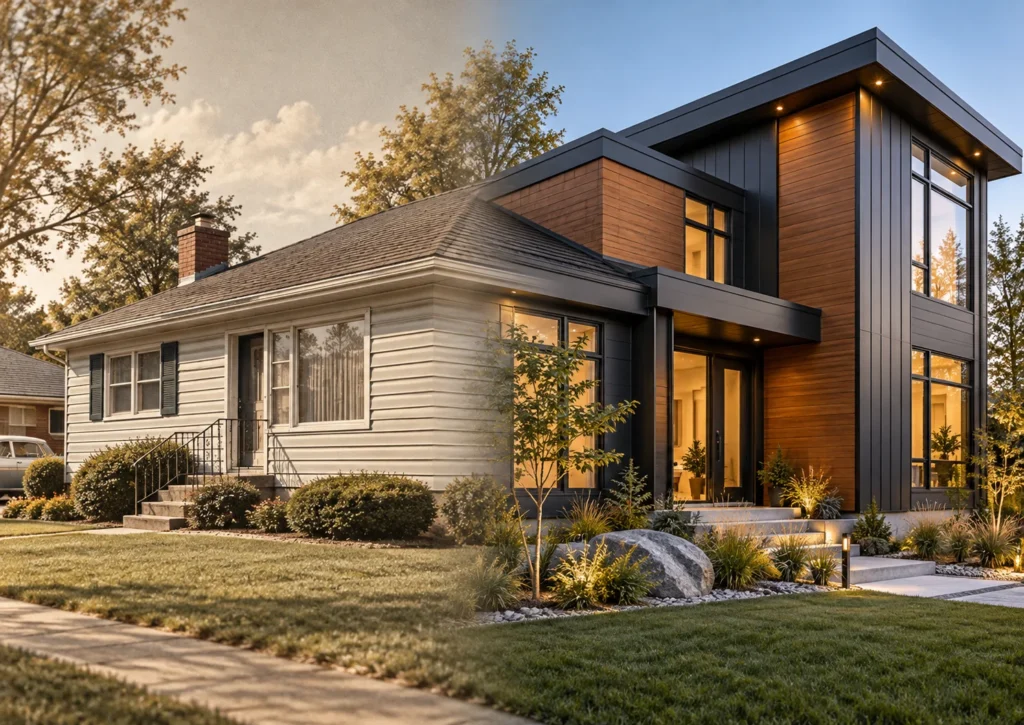
Ask someone to picture aluminum siding and there is a good chance they will imagine a North American house from the 1950s, 1960s or 1970s covered in thin horizontal metal panels.
That image is historically accurate, but it no longer tells the whole story.
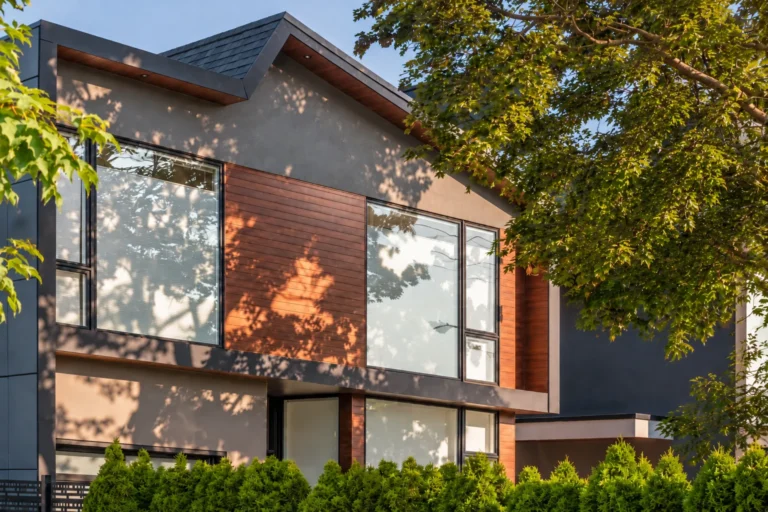
Modern aluminum siding can be very different from the roll-formed panels that became common after the Second World War. Today’s architectural systems can use solid extruded aluminum profiles, precision attachment systems, long panel lengths, contemporary colours and realistic woodgrain finishes.
So, was aluminum siding discontinued?
No. Aluminum siding never disappeared. It evolved.
To understand modern aluminum siding, it helps to follow the material from its early architectural use, through the postwar siding boom, the rise of vinyl, and finally to the emergence of today’s premium extruded aluminum systems.
Aluminum in North American Architecture Before Aluminum Siding
Aluminum siding did not appear out of nowhere in the 1940s.
Aluminum had already been gaining importance in North American architecture during the early twentieth century. Improvements in aluminum production and extrusion made it possible to manufacture lightweight, corrosion-resistant architectural components with increasingly complex shapes.
The Empire State Building, constructed beginning in 1930, became one of the early high-profile examples of aluminum being used extensively in a major building.

Extrusion was particularly important to the future of architectural aluminum.
Instead of simply bending a thin sheet into shape, extrusion involves pushing heated aluminum through a precision die. The result can be a continuous profile with a much more complex and controlled cross-section.
That manufacturing method would eventually become fundamental to products ranging from window frames and curtain walls to the type of architectural extruded siding systems used today.
But residential aluminum siding followed a somewhat different path.
1939-1946: The Foundations of Residential Aluminum Siding
One of the early developments came from inventor Frank L. Hoess, who worked on interlocking metal building components before the Second World War.
By 1946, Hoess was involved in manufacturing an interlocking siding system using aluminum through Metal Building Products of Detroit.
At approximately the same time, Reynolds Metals was also developing residential aluminum siding.
A widely cited milestone occurred in 1945, when Reynolds installed aluminum siding on a house and garage in Louisville, Kentucky.
The timing was not accidental.
World War II Changed the Aluminum Industry
The Second World War dramatically expanded aluminum manufacturing in North America.
Aircraft production required enormous quantities of aluminum, while advances in alloys, forming, coatings and extrusion accelerated during the war.
When the war ended, aluminum manufacturers had production capabilities that could now be redirected toward civilian applications.
Housing was an obvious opportunity.
North America was entering a major postwar building boom. Millions of families needed houses, existing homes needed modernization, and manufacturers were looking for materials that could be produced efficiently at scale.
Aluminum was:
- lightweight
- corrosion resistant
- relatively easy to form
- resistant to rot and insects
- suitable for factory manufacturing
- capable of covering existing wood façades
It quickly became an attractive alternative to traditional painted wood siding.
1947: Factory-Finished Aluminum Changes the Market
Another major step arrived in the late 1940s.
Jerome Kaufman developed residential aluminum siding with a factory-applied baked-enamel finish, an innovation that helped transform aluminum siding from an industrial-looking metal product into something suitable for mainstream residential architecture.
Instead of homeowners regularly scraping and repainting wood clapboard, manufacturers could offer siding with colour already applied at the factory.
This was a powerful proposition in postwar North America:
a house exterior that looked relatively traditional but required far less routine painting.
By the late 1940s, manufacturers were producing aluminum siding in different widths and profiles intended to resemble traditional wood weatherboards and clapboards.
A U.S. Forest Service history of twentieth-century siding notes that Kaiser Aluminum was manufacturing a 7-inch aluminum siding profile by 1948 and that manufacturers actively marketed aluminum siding as a way to modernize older homes. USDA history of twentieth-century siding materials
The 1950s: Aluminum Siding Becomes a North American Mainstream Product
The 1950s were when aluminum siding truly moved into the mainstream.
New suburban construction expanded quickly across the United States and Canada, while owners of older houses increasingly looked for alternatives to repainting wood every few years.
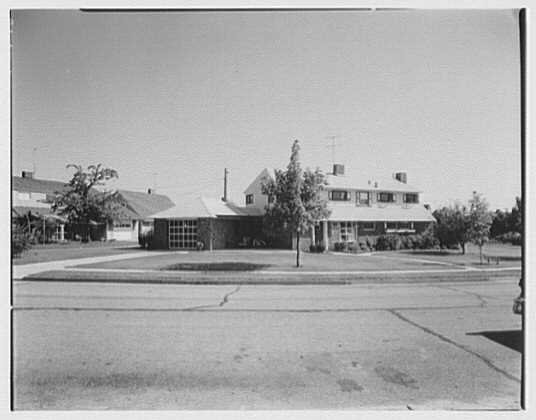
Aluminum siding fit that market extremely well.
Manufacturers promoted it as:
- low maintenance
- durable
- resistant to rot
- resistant to insects
- modern
- relatively easy to install over existing exteriors
Advertising often focused less on aluminum as an architectural material and more on the idea of eliminating exterior maintenance.
That distinction is important.
Traditional aluminum siding was primarily competing with painted wood.
Modern architectural aluminum siding is often selected for entirely different reasons.
More Than Three Million Homes by 1960
The growth was remarkable.
Historical research into American postwar housing estimates that more than three million houses in the United States had been clad with aluminum siding by 1960.
In only about fifteen years, aluminum siding had moved from a relatively experimental building product to a familiar part of the North American suburban landscape.
Aluminum Becomes an Architectural Statement
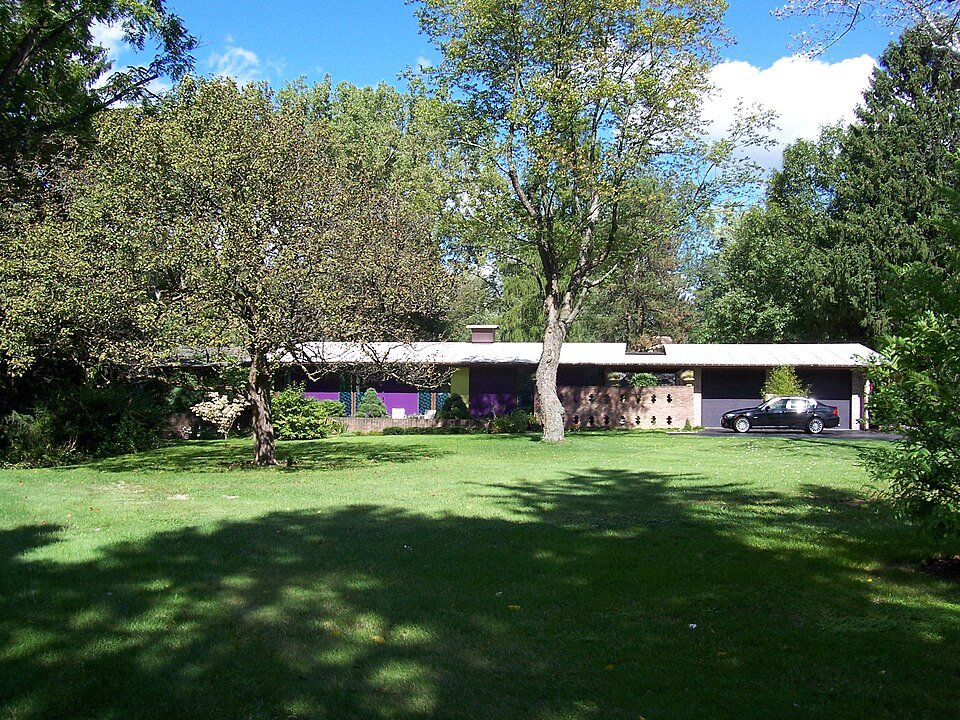
Aluminum was also being explored as more than a practical replacement for painted wood. In 1957, Alcoa commissioned architect Charles M. Goodman to design the experimental Alcoa Care-Free Home, demonstrating how extensively aluminum could be incorporated into residential architecture.
The project is an early example of designers treating aluminum as an architectural material in its own right rather than simply using it to imitate traditional wood construction.
The 1960s and 1970s: The Era of “Old-Style Aluminum Siding”
When people today search for old-style aluminum siding, this is usually the product they are thinking about.
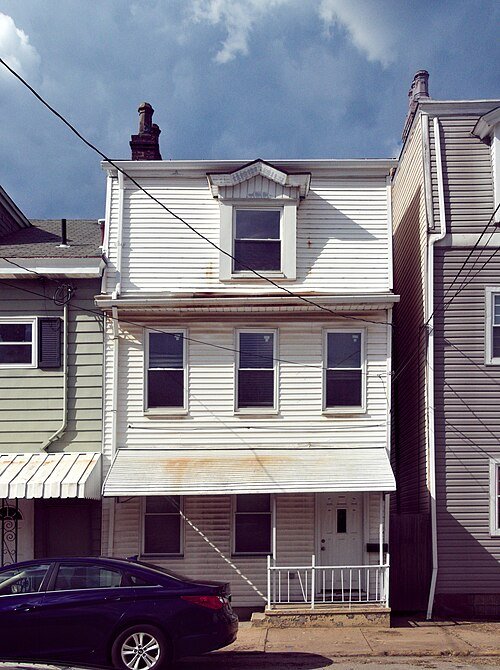
It was generally:
- made from relatively thin aluminum sheet
- roll-formed into a siding profile
- installed primarily horizontally
- shaped to imitate traditional wood clapboard
- available in factory-applied colours
- designed as a practical, low-maintenance residential exterior
It worked.
Millions of houses were clad with it.
It was also very different from today’s heavier architectural extrusions.
The U.S. Forest Service identifies the 1970s as the peak period for traditional aluminum siding use in North America.
And then the market began changing.
Vinyl Siding Arrives
Vinyl siding started entering the North American siding market during the 1960s.
Early vinyl products had their own limitations, and aluminum remained an established choice for years. But vinyl manufacturing improved significantly through the 1970s and 1980s.
Eventually, vinyl offered several powerful advantages for the mass residential market.
It Was Less Expensive
This was probably the most important factor.
Traditional aluminum siding had originally succeeded partly because it reduced the long-term maintenance associated with painted wood.
Vinyl now offered a similar low-maintenance proposition at a lower material cost.
For large subdivisions and cost-sensitive renovations, that mattered enormously.
Vinyl Did Not Dent Like Thin Aluminum
Old residential aluminum panels could be dented.
A ladder, hail, a ball or another impact could leave a permanent deformation in relatively thin roll-formed material.
Vinyl behaved differently. It could flex under impacts that might leave a dent in thin aluminum.
Colour Could Run Through the Material
Older aluminum siding depended heavily on its applied surface coating.
Vinyl could be manufactured with colour throughout the material, helping hide minor scratches.
Vinyl Manufacturing Improved
Profiles, colour stability, impact resistance and manufacturing consistency all improved.
Vinyl therefore became increasingly attractive to builders who wanted a siding product that was:
inexpensive + low maintenance + easy to install + available at very large scale.
By the 1990s, vinyl had decisively overtaken traditional aluminum siding in the North American residential market.
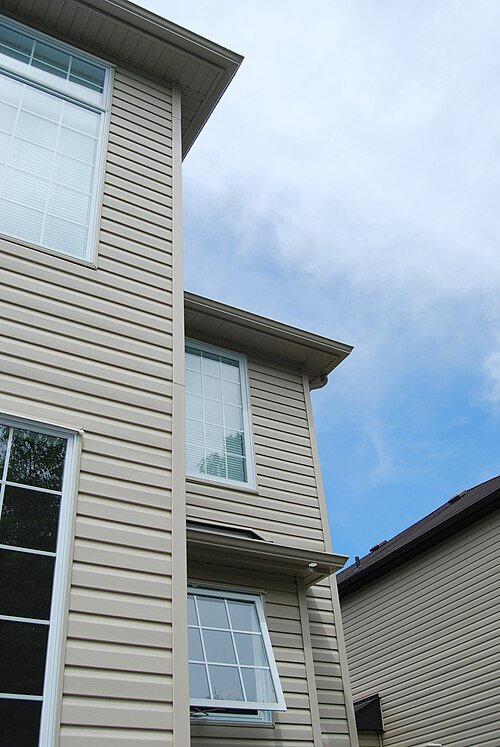
A 1995 retrospective on the 50th anniversary of aluminum siding reported that aluminum represented only about 3% of siding sales, while vinyl represented approximately 44%. The lower cost of vinyl and its resistance to denting were specifically identified as reasons for the shift. The Washington Post’s 50-year retrospective on aluminum siding
Why Did Aluminum Siding Lose the Market to Vinyl?
The answer is therefore not that aluminum suddenly became a bad building material.
Traditional aluminum siding lost market share because vinyl solved the same mass-market problem at a lower cost.
Both products were being sold primarily as alternatives to high-maintenance painted wood.
Vinyl simply became very effective at competing on:
| Market factor | Traditional aluminum siding | Vinyl siding |
|---|---|---|
| Initial cost | Higher | Lower |
| Maintenance | Low | Low |
| Resistance to denting | Limited on thin panels | Does not permanently dent in the same way |
| Large-scale residential availability | Good | Excellent |
| Colour options | Good | Increasingly broad |
| Installation | Relatively straightforward | Relatively straightforward |
| Mass-market value proposition | Strong initially | Eventually stronger |
By the late twentieth century, vinyl had won the volume siding market.
But something else was happening at the same time.
Aluminum itself was becoming increasingly sophisticated as an architectural material.
Was Aluminum Siding Discontinued?
No.
There was never a single date when aluminum siding was discontinued in North America.
Traditional roll-formed aluminum siding is still manufactured today. Canadian manufacturers including Gentek and Kaycan continue to offer aluminum siding products.
What disappeared was not aluminum siding itself.
What largely disappeared was its position as the default low-maintenance residential siding product.
That distinction matters.
If someone asks:
Do they still make aluminum siding?
Yes.
Is aluminum siding still available?
Yes.
Do they still make aluminum siding for houses?
Yes.
When did they stop using aluminum siding?
They did not. Its market share declined significantly after vinyl became the dominant low-cost residential siding option.
And at the premium end of the market, aluminum was beginning to evolve in a very different direction.
Aluminum Never Left Architecture
While thin residential aluminum siding was losing ground to vinyl, aluminum continued to become more important in commercial and architectural construction.
Extruded aluminum was increasingly used for:
- curtain walls
- windows
- entrances
- storefronts
- louvers
- railings
- sunshades
- façade systems
- structural and decorative architectural profiles
Architects valued extrusion because a profile could be engineered rather than simply folded from flat sheet.
This opened possibilities that old residential aluminum siding never had.
Profiles could become deeper, more rigid and more precise.
Attachment systems could be incorporated into the design.
Joints could become cleaner.
Long continuous architectural lines became possible.
Finishing technology also advanced dramatically.
Aluminum could now be powder coated, anodized or given highly realistic wood-look finishes rather than simply painted in conventional siding colours.
Those developments set the stage for the next generation.
The Rise of Modern Extruded Aluminum Siding
By the early twenty-first century, a new category of aluminum exterior system was becoming increasingly visible in North American architecture:
extruded architectural aluminum siding.
This is not simply old aluminum siding made slightly thicker.
The manufacturing process is fundamentally different.
Traditional residential aluminum siding generally starts as relatively thin aluminum coil or sheet that is passed through rollers to create its shape.
Extruded siding starts with an aluminum billet.
The aluminum is heated and forced through a precision die that creates the cross-section of the finished profile.
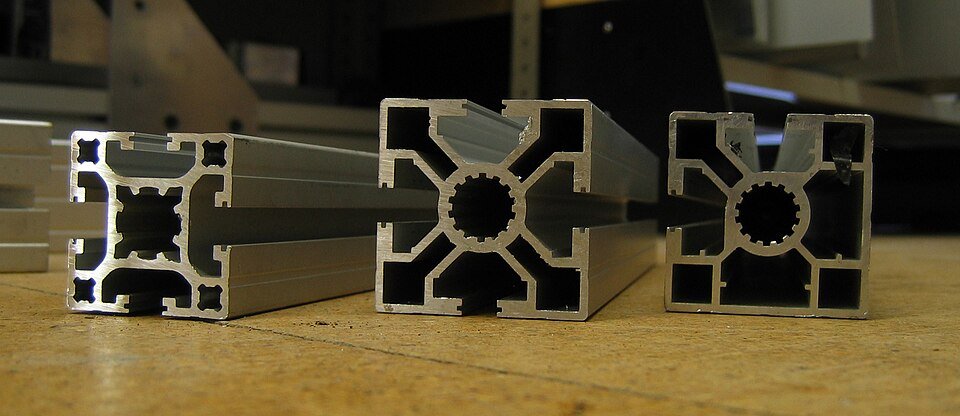
That difference allows modern manufacturers to create siding that is substantially more rigid and geometrically precise.
For a more detailed comparison, see our guide to residential aluminum siding and the differences between roll-formed and extruded systems.
Old Aluminum Siding vs Modern Aluminum Siding
| Old-style residential aluminum siding | Modern extruded aluminum siding |
|---|---|
| Usually thin roll-formed sheet | Solid extruded profile |
| Primarily a wood-clapboard substitute | Architectural exterior material |
| Often associated with horizontal lap siding | Horizontal, vertical, V-Groove, corrugated and custom arrangements |
| Lower rigidity | Significantly more rigid profiles |
| Thin panels susceptible to denting | Heavier profiles provide greater impact resistance |
| Designed mainly for residential renovation | Residential, commercial and institutional applications |
| Conventional factory-painted colours | Architectural solid colours and woodgrain finishes |
| Traditional visible siding geometry | Clean joints and concealed attachment possibilities |
| Primarily value-driven | Performance and design-driven |
| Competed directly with vinyl | Occupies a more premium architectural category |
This distinction is central to understanding modern aluminum siding.
Today’s premium aluminum siding is not trying to recover the exact market position aluminum occupied in 1965.
It is serving a different part of the market.
Why Modern Aluminum Siding Can Outperform Vinyl
Vinyl siding did not become popular by accident.
It remains a practical material for many houses, particularly when low initial cost is the main priority.
But modern extruded aluminum changes the comparison.
Instead of comparing vinyl with thin 1960s aluminum siding, architects, builders and homeowners can now compare vinyl with a much more rigid architectural aluminum system.
And that creates a very different result.
For a detailed material comparison, see our guide to aluminum siding vs vinyl siding for Ontario climates.
1. Modern Aluminum Has Much Greater Rigidity
One of the biggest differences is immediately noticeable when the materials are handled.
VEDREX profiles are manufactured from 6063-T6 architectural aluminum and use a 1.6 mm profile thickness for the 4-inch and 6-inch V-Groove siding systems.
That is fundamentally different from both conventional vinyl siding and thin roll-formed aluminum.
Greater rigidity helps produce:
- straighter architectural lines
- more controlled joints
- less surface flex
- greater resistance to everyday impacts
- more substantial-feeling façades
This becomes particularly important on modern homes where long horizontal or vertical lines are part of the architecture itself.
2. Aluminum Creates a More Architectural, Premium Exterior
Material performance is only part of the difference.
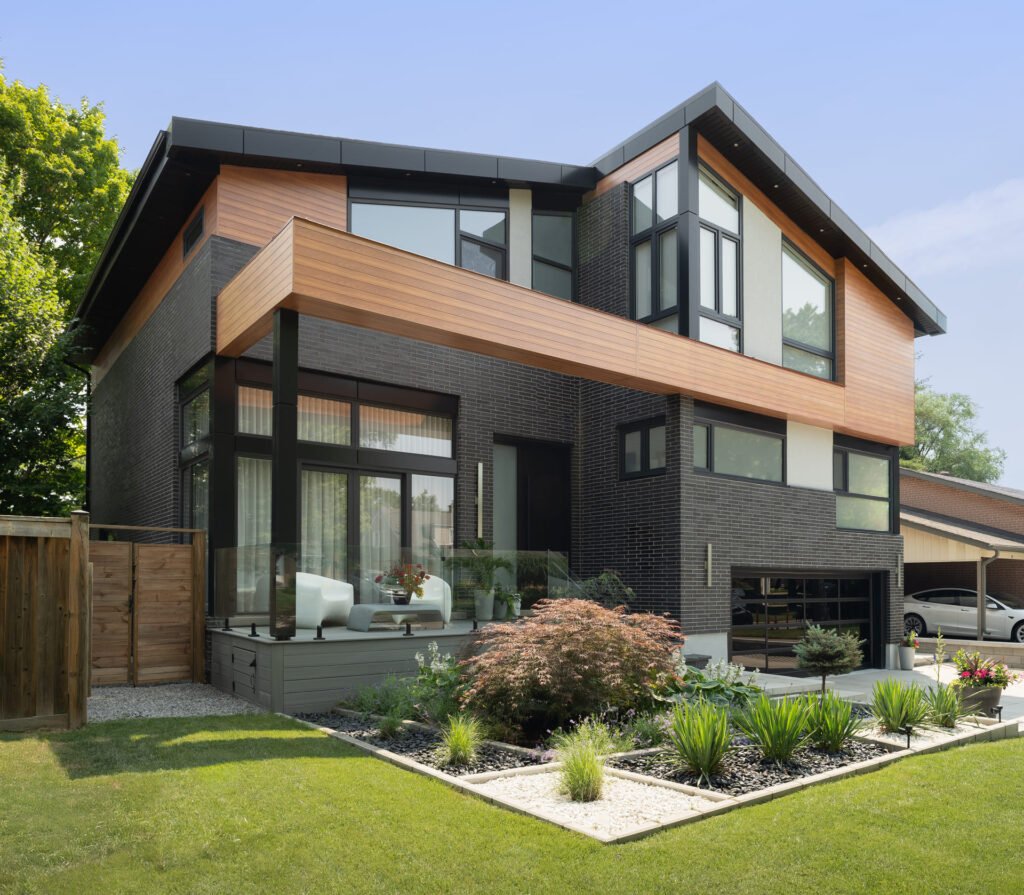
Modern luxury residential design increasingly uses the exterior envelope as an architectural feature.
The façade may combine:
- large areas of glazing
- stone
- brick
- concrete
- wood textures
- dark architectural metals
- vertical and horizontal transitions
Traditional vinyl siding can work well on conventional houses, but its geometry and manufacturing limitations make it more difficult to achieve the appearance of a precision architectural façade.
Extruded aluminum can produce:
- narrow V-Groove lines
- long continuous profiles
- crisp corners
- concealed attachment
- vertical installations
- horizontal installations
- wood-look façades
- deep solid colours
- corrugated architectural surfaces
This is why modern aluminum increasingly appears on custom homes, luxury renovations and architect-designed buildings, rather than simply replacing inexpensive siding.
Explore how orientation changes a façade in our guide to vertical aluminum siding panels, or see how deeper geometry can change the exterior in our guide to corrugated aluminum siding.
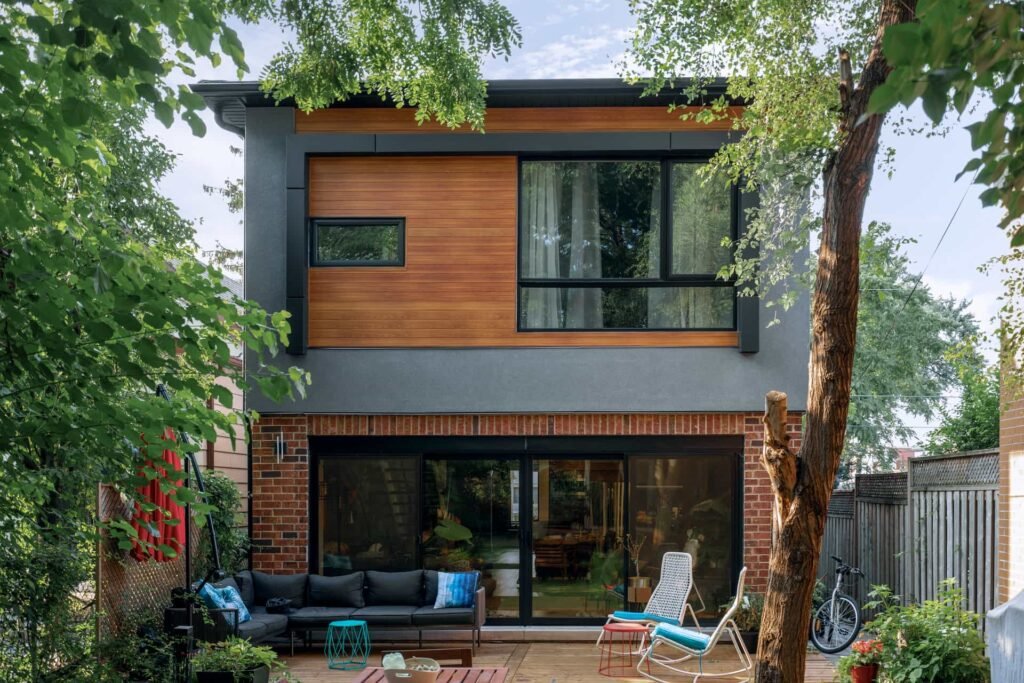
3. Woodgrain Aluminum Has Changed the Aesthetic Equation
One of aluminum’s historical weaknesses was aesthetic.
Traditional aluminum siding tried to imitate painted wood clapboard, but the result still looked like conventional siding.
Modern finishing technology has changed that dramatically.
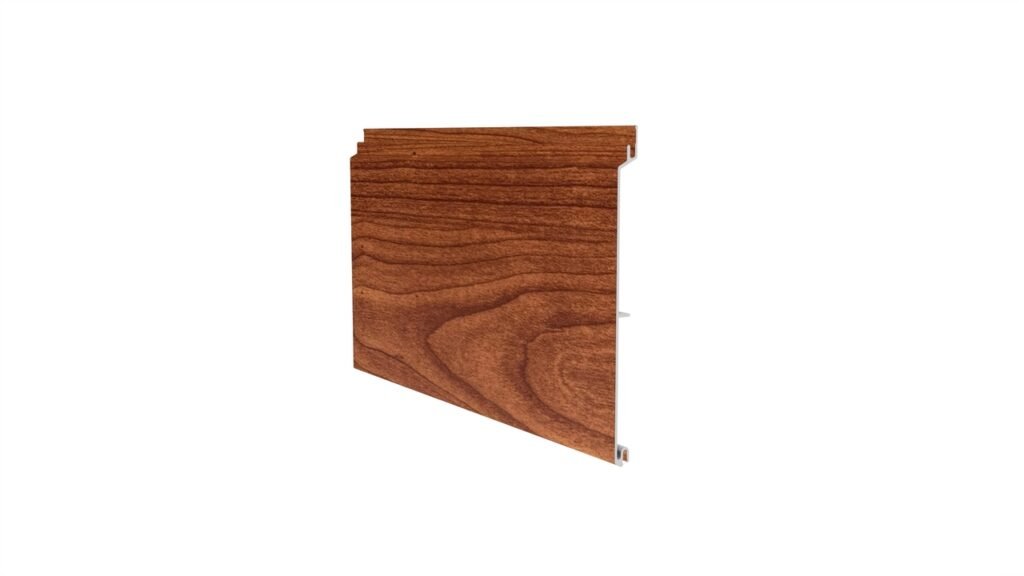
Powder coating and sublimation can create woodgrain surfaces that introduce natural-looking texture and variation without requiring actual timber on the exterior.
This allows architects to combine the warmth associated with wood and the durability of aluminum.
Modern woodgrain aluminum is particularly useful around:
- entrances
- upper-storey volumes
- gables
- accent walls
- garages
- contemporary additions
- commercial façades
Our complete guide to wood grain aluminum siding explains how these finishes are produced and where they work best.
4. Aluminum Has an Important Fire-Performance Advantage
Aluminum itself is a non-combustible material.
Vinyl is manufactured from PVC, an organic polymer.
That does not mean every aluminum wall automatically meets every fire requirement. Fire performance always depends on the complete wall assembly, including insulation, membranes, substructure and other materials.
But when material combustibility is an important design consideration, an aluminum exterior profile provides a fundamental advantage over combustible exterior finishes.
This can be particularly relevant for:
- dense urban construction
- multi-residential buildings
- commercial projects
- institutional projects
- buildings where exterior fire strategy matters
5. Modern Aluminum Is Well Suited to Canadian Temperature Changes
Canada presents exterior materials with a difficult combination of conditions.
A building in Ontario may experience freezing winter temperatures, strong summer sun, rain, snow, ice, humidity and major seasonal temperature swings.
Vinyl is specifically engineered to accommodate thermal movement.
In fact, industry installation guidance states that vinyl siding can expand and contract 1/2 inch or more over a 12-foot-6-inch panel during normal year-round temperature changes. Installers must leave sufficient clearance and avoid fastening panels tightly so they can move freely. Polymeric Exterior Products Association vinyl siding installation guidance
Modern aluminum also expands and contracts with temperature, so aluminum systems must also be designed correctly for thermal movement.
The difference is in how the material behaves structurally.
Extruded aluminum remains rigid while a properly engineered clip and trim system accommodates the required movement.
With VEDREX, thermal movement is considered as part of the complete system rather than expecting the face of the siding itself to flex.
Our aluminum siding installation guide explains how profiles, clips, trims and expansion allowances work together.
6. Aluminum Does Not Absorb Water
Canadian walls must deal with more than temperature.
Snow, wind-driven rain and freeze-thaw conditions make moisture management critical.
Aluminum itself does not absorb water, swell or rot.
That does not eliminate the need for good wall design. Water still needs somewhere to drain, penetrations need proper flashing, and exterior walls need to be detailed correctly.
This is why modern aluminum siding is particularly effective when treated as part of a rainscreen wall assembly rather than simply as a decorative skin.
A rainscreen cavity allows water that passes the exterior surface to drain and provides space behind the cladding for ventilation and drying.
The result is a much more complete approach to the building envelope than simply asking whether the siding itself is waterproof.
7. Corrosion Behaviour Makes Aluminum Suitable for Exterior Exposure
Aluminum does not rust in the same way carbon steel does.
When bare aluminum is exposed to oxygen, it rapidly develops a thin oxide layer that helps protect the underlying metal.
Architectural coatings provide additional surface protection and determine much of the visible colour and appearance.
That makes aluminum particularly suitable for long-term exterior applications when appropriate alloys, coatings, fasteners and installation details are used.
If you want to understand this behaviour in more detail, see our guide to aluminum siding oxidation and corrosion resistance.
8. Aluminum Offers Strong End-of-Life Recyclability
Aluminum also has an important material advantage at the end of a building product’s service life.
It can be recycled repeatedly and returned to new aluminum production.
This does not mean aluminum has zero environmental impact. Primary aluminum production requires significant energy, and the environmental profile depends on recycled content, electricity sources, manufacturing and transportation.
But aluminum’s ability to remain within a material recycling loop is one reason it continues to play such an important role in modern building construction.
Modern Aluminum Siding vs Vinyl Siding in Canada
The comparison today is therefore very different from the comparison in 1975.
| Consideration | Vinyl siding | Modern extruded aluminum siding |
|---|---|---|
| Upfront price | Advantage | Higher |
| Architectural rigidity | Moderate | Advantage |
| Precision of long façade lines | Good | Advantage |
| Premium architectural appearance | Good in suitable applications | Advantage |
| Wood-look options | Available | High-end architectural options |
| Thermal movement | Significant movement must be accommodated | Movement must also be engineered into system |
| Material combustibility | PVC is combustible | Aluminum profile is non-combustible |
| Moisture absorption | Does not absorb water | Does not absorb water |
| Rot | No | No |
| Corrosion | Not applicable like metal | Naturally corrosion resistant |
| Impact behaviour | Flexible but can crack under sufficient impact | Rigid extruded profile resists many everyday impacts |
| Rainscreen integration | System dependent | Well suited to architectural rainscreen design |
| Recycling | Possible | Highly recyclable metal stream |
| Best fit | Budget-conscious residential siding | Premium residential, commercial and architectural projects |
The lesson is not that vinyl has suddenly become a bad siding material.
The lesson is that modern aluminum no longer competes with vinyl on exactly the same terms.
Vinyl remains extremely effective when the objective is to cover a house economically with a familiar, low-maintenance exterior.
Modern extruded aluminum becomes more compelling when the priorities change to:
architecture + durability + rigidity + premium finishes + fire characteristics + long-term exterior performance.
From Economy Siding to Architectural Material
This may be the most important change in the entire history of aluminum siding.
In the 1950s, aluminum was often marketed as a practical substitute for painted wood.
The message was essentially:
Cover the old siding and stop repainting your house.
Today, premium extruded aluminum is increasingly specified for the opposite reason.
It is not hidden.
It is intentionally visible.
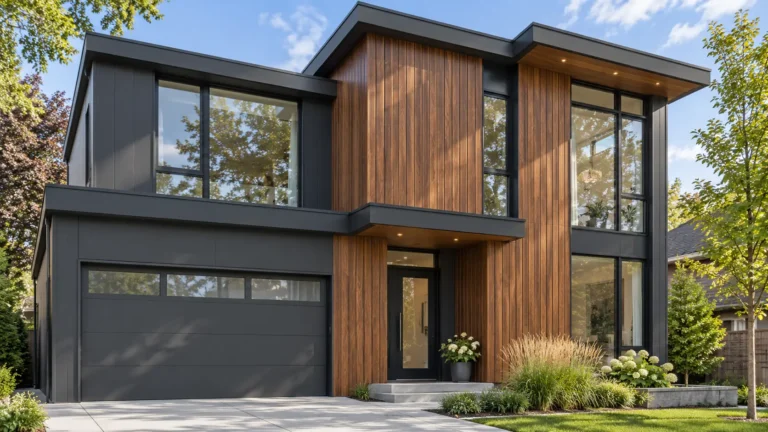
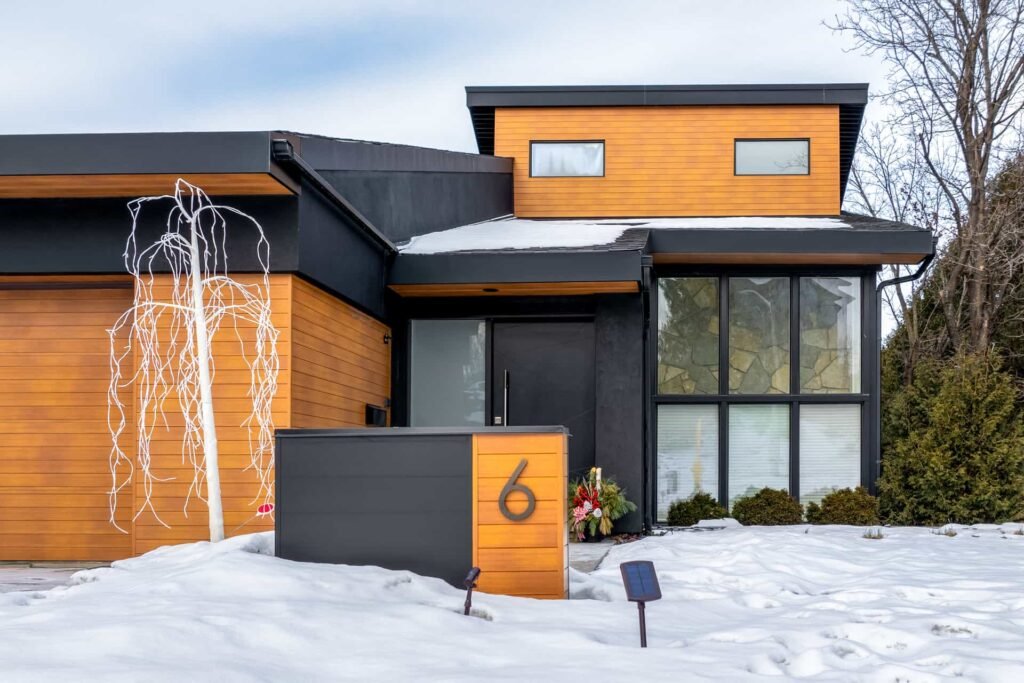
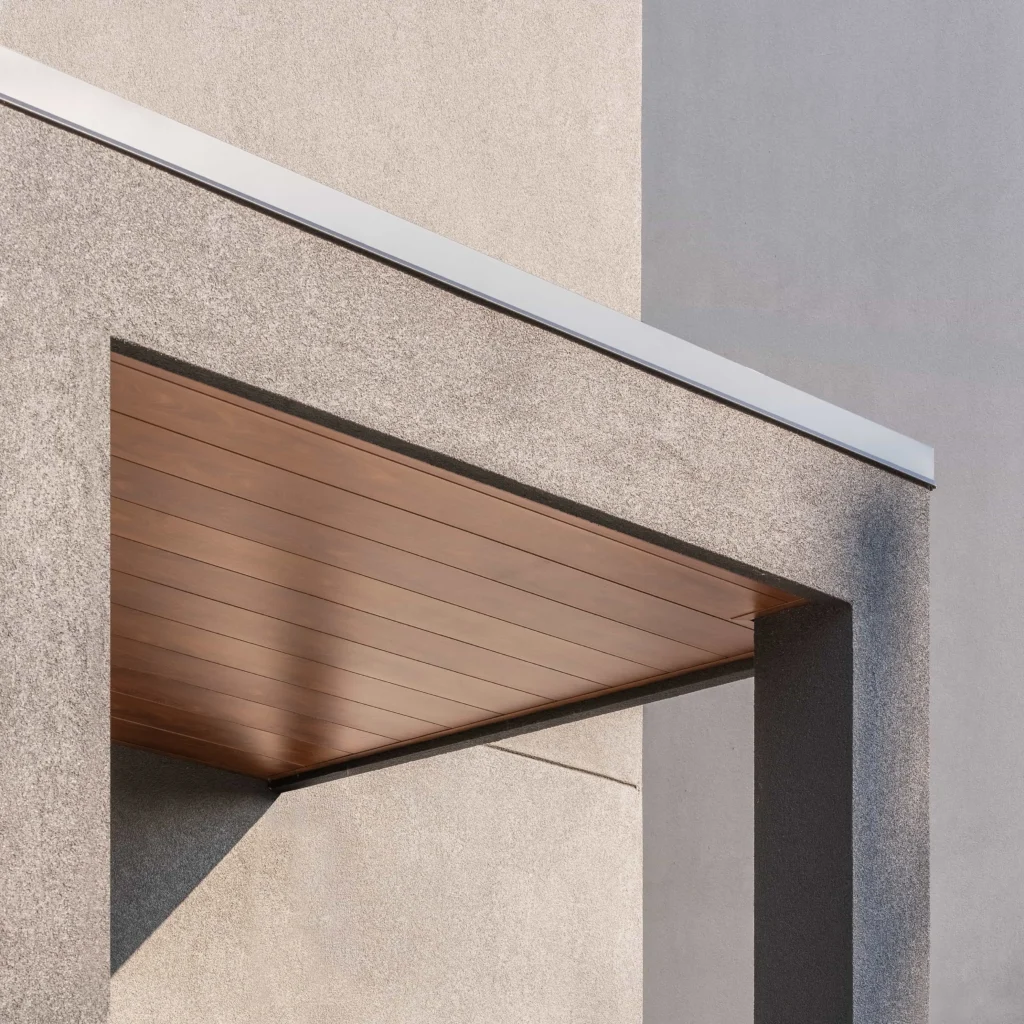
Architects use the material to define entrances, emphasize building volumes, create long horizontal lines, extend vertical elements toward the roof and combine warm wood textures with glass, masonry and dark contemporary finishes.
The material has moved from maintenance solution to architectural design element.
What Modern Aluminum Siding Looks Like Today
VEDREX manufactures modern extruded aluminum siding systems in Ontario for contemporary Canadian residential, commercial and institutional projects.
Current siding profiles include:
- 6-inch V-Groove
- 4-inch V-Groove
- 2.5-inch V-Groove
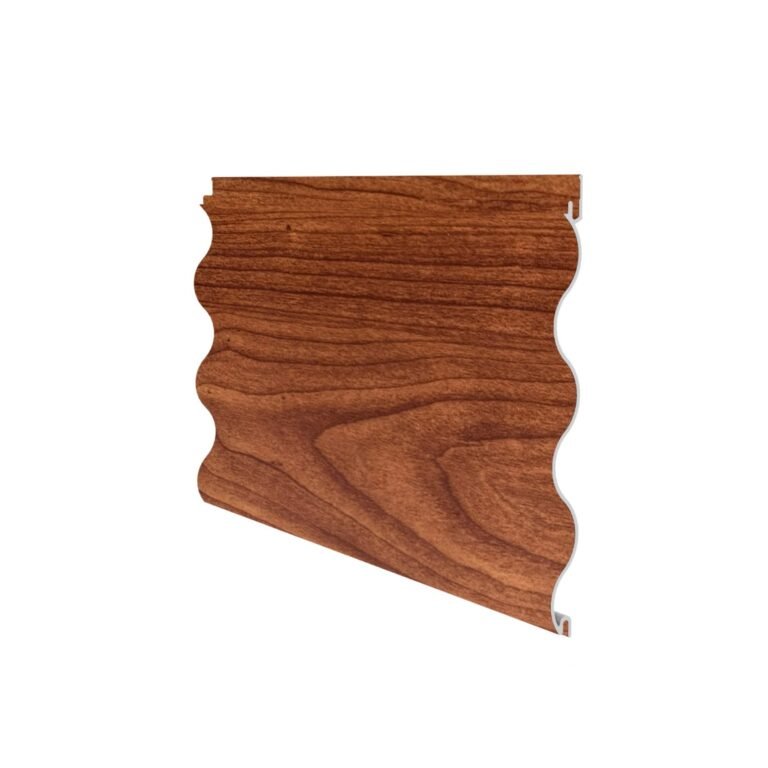
- 6-inch Corrugated
VEDREX uses 6063-T6 architectural aluminum, with 4-inch and 6-inch V-Groove profiles available in lengths up to 19 feet.
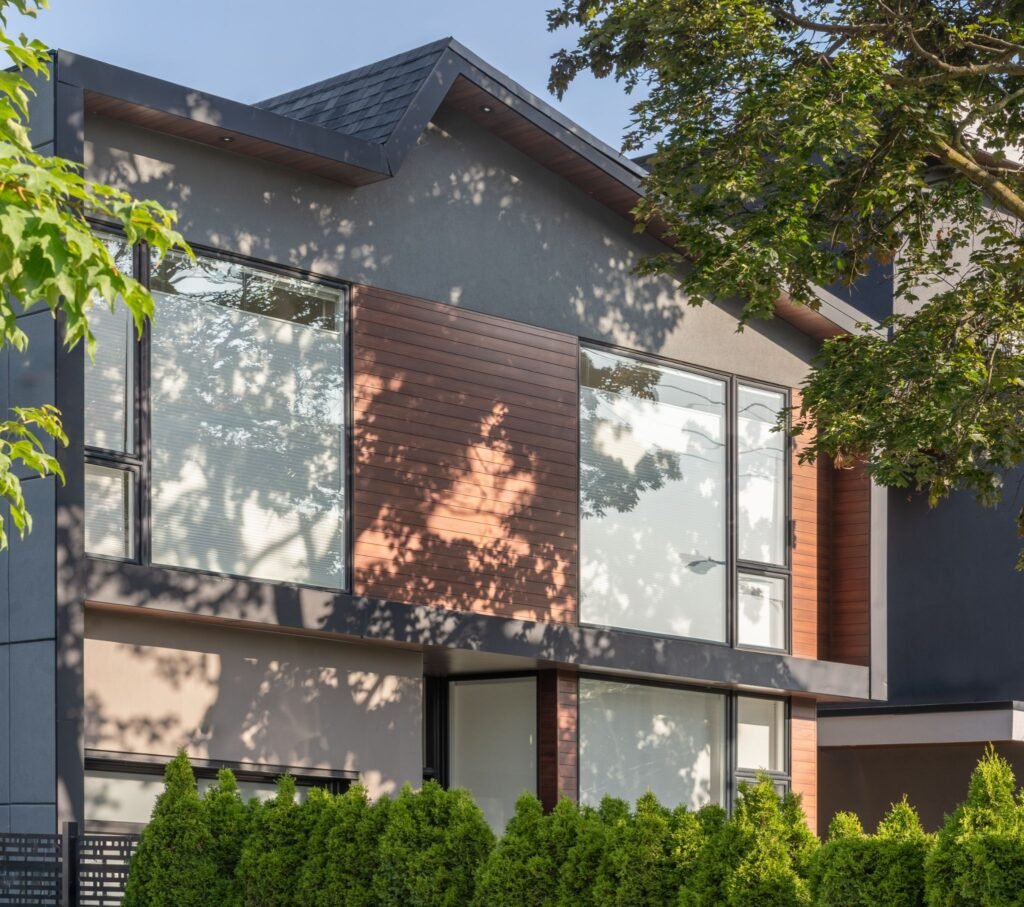
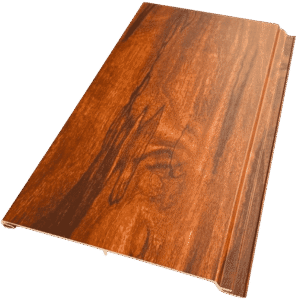
Finishes include both modern solid colours and woodgrain options.
These longer, rigid profiles allow designers to create very different façades from the repetitive short-panel appearance traditionally associated with residential siding.
Modern aluminum can be:
- installed horizontally
- installed vertically
- combined in multiple orientations
- paired with masonry
- paired with stone
- paired with large glazing systems
- continued into soffit and ceiling applications
- used for full façades or individual architectural volumes
This is why the term modern aluminum siding increasingly describes something very different from the aluminum siding installed on North American houses seventy years ago.
So, Is Modern Aluminum Siding Better Than Vinyl?
That depends on what the project is trying to achieve.
If the primary goal is:
the lowest possible upfront siding cost, vinyl is difficult to beat.
That is one of the reasons it took so much market share from traditional aluminum.
But if the project priorities include:
- premium architectural appearance
- long, rigid profiles
- clean modern lines
- wood-look finishes without natural wood maintenance
- non-combustible exterior material
- higher structural rigidity
- rainscreen construction
- long-term exterior durability
- resistance to rot and moisture absorption
- compatibility with modern Canadian architecture
then modern extruded aluminum siding occupies a different performance category.
That distinction becomes especially important in Canada, where exterior systems must perform across large seasonal temperature ranges while also dealing with snow, rain, humidity and prolonged UV exposure.
Vinyl won the twentieth-century battle for economical residential siding.
Modern extruded aluminum is not trying to reverse history by becoming the cheapest siding again.
It is competing for something else:
the premium architectural exterior.
The Evolution of Aluminum Siding
The history can be summarized in a few major stages:
1930s
Aluminum becomes increasingly important in North American architecture and manufacturing.
1940s
Interlocking residential aluminum siding systems emerge. Reynolds installs aluminum siding in 1945, and factory-finished products develop later in the decade.
1950s
Postwar housing and renovation create enormous demand for low-maintenance aluminum siding.
1960
More than three million U.S. homes have been clad with aluminum siding.
1960s-1970s
Traditional thin roll-formed aluminum siding becomes a familiar feature of North American residential architecture.
1970s
Aluminum siding reaches its peak period while vinyl improves rapidly.
1980s-1990s
Lower-cost vinyl increasingly dominates the mass residential siding market.
2000s onward
Advanced extrusion, architectural coatings, woodgrain finishes and engineered façade systems help create a new premium category of modern aluminum siding.
Today
Traditional aluminum siding still exists, but extruded architectural aluminum has expanded what the term aluminum siding can mean.
Aluminum Siding Did Not Disappear. It Evolved.
The history of aluminum siding is not a simple story of a building material being invented, becoming popular and then disappearing.
It is a story of changing markets and changing technology.
Traditional aluminum siding solved one of the biggest exterior problems of postwar North America: homeowners were tired of maintaining painted wood.
Vinyl eventually solved that problem more cheaply, and it took much of the mass residential siding market as a result.
But aluminum continued evolving elsewhere in architecture.
- Extrusion became more sophisticated.
- Profiles became stronger.
- Coatings improved.
- Woodgrain finishes became remarkably realistic.
- Rainscreen construction changed the way modern façades were designed.
- And eventually those technologies came together in a new generation of modern aluminum siding.
The aluminum siding installed on a contemporary Canadian home today may therefore have relatively little in common with the thin metal clapboard installed on a suburban house in 1965.
The material is the same.
The purpose, manufacturing, engineering and architecture have changed dramatically.
Frequently Asked Questions About Aluminum Siding History
Is aluminum siding discontinued?
No. Aluminum siding is still manufactured and sold in North America. Traditional roll-formed aluminum siding is less common than it once was, while modern extruded aluminum siding has developed into a premium architectural product category.
Do they still make aluminum siding?
Yes. Both traditional aluminum siding and modern extruded architectural aluminum siding are available today.
Can you still purchase aluminum siding?
Yes. Availability depends on the type of siding you need. Traditional replacement-style aluminum siding still exists, while architectural manufacturers produce modern extruded systems for new construction and exterior renovations.
When was aluminum siding invented?
Residential aluminum siding developed through several innovations during the 1930s and 1940s rather than appearing from a single invention. Reynolds Metals was installing aluminum siding by 1945, while factory-finished residential aluminum siding became commercially important during the late 1940s.
Who invented aluminum siding?
There is no single uncontested inventor. Frank Hoess developed important interlocking metal siding technology, Reynolds Metals was an early commercial producer, and Jerome Kaufman played a major role in developing factory-finished baked-enamel residential aluminum siding.
When did aluminum siding become popular?
Aluminum siding grew rapidly during the North American postwar housing boom of the late 1940s and 1950s. By 1960, more than three million U.S. homes reportedly had aluminum siding.
Why is aluminum siding no longer used as much as before?
Traditional aluminum siding lost market share primarily because vinyl became a lower-cost, low-maintenance alternative that did not dent like thin aluminum panels. Aluminum never disappeared, however, and modern extruded aluminum now serves a substantially different architectural market.
What is the difference between old aluminum siding and modern aluminum siding?
Old residential aluminum siding was generally thin, roll-formed sheet designed to resemble traditional horizontal wood siding. Modern architectural aluminum can use heavier extruded profiles, engineered attachment systems, longer panel lengths and high-performance solid or woodgrain finishes.