Black aluminum siding brings strong contrast and clean lines to an exterior. It can define a contemporary home, give a commercial entrance more presence, or turn a small addition into a deliberate architectural feature. Its success depends on where the black is placed, how the profiles run, and what sits beside it.
At VEDREX, we manufacture architectural aluminum systems in Ontario with solid-colour and woodgrain finishes. For a black exterior, the design can range from a crisp solid black to softer charcoal or a dark, textured woodgrain palette.
Choosing Aluminum Siding in Black: Start with the Finish
Not every dark finish creates the same effect. A solid black reads differently from charcoal, while woodgrain adds variation that changes how a wall looks at close range. Compare physical samples against the actual brick, stone, window frames, and roofing before choosing.
| VEDREX finish | Visual direction | Where to consider it |
|---|---|---|
| Acrynar Black | A solid black option for a clearly defined dark exterior | Feature walls, contemporary additions, entrances and coordination with black windows |
| Charcoal Gray | A softer charcoal alternative to a full black palette | Stone exteriors, mixed-material homes and projects needing a gentler transition between light and dark |
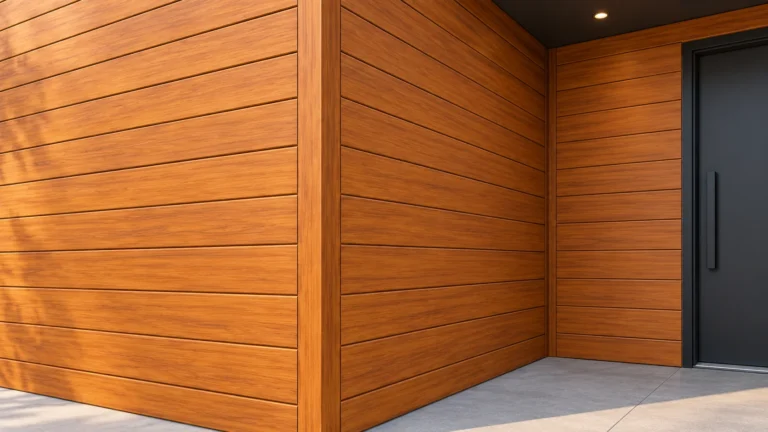
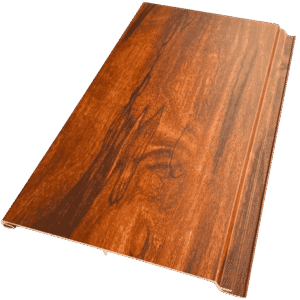
| Blue ELM Wood | A dark woodgrain option that introduces visible pattern | Sheltered entrances, accent areas and designs seeking texture within a dark palette |
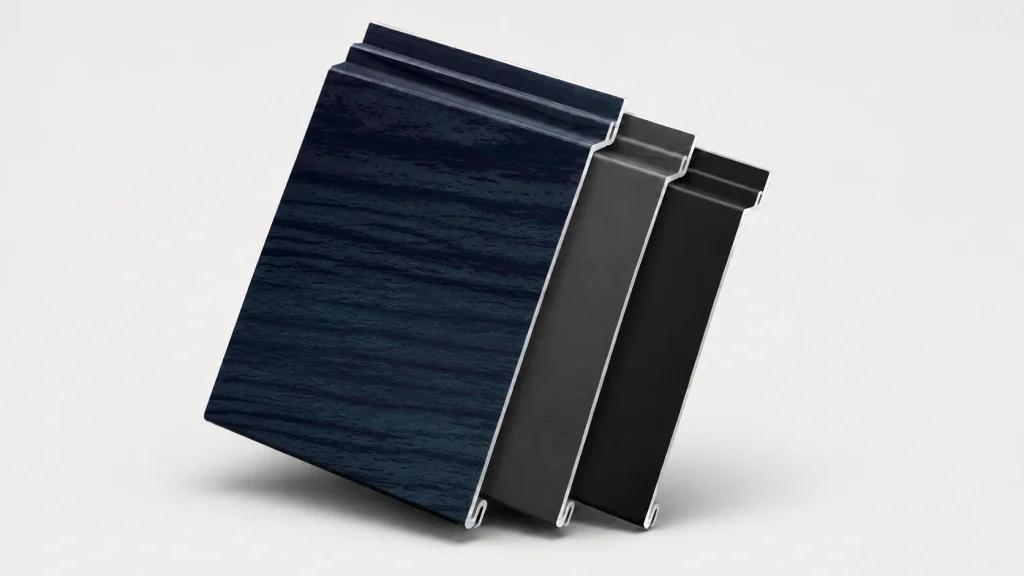
Charcoal and dark woodgrain are alternatives to solid black, rather than identical colours. Our aluminum siding colours and finishes collection lets you compare these options with the lighter finishes that might accompany them.
Check the Sheen as Well as the Colour
Surface sheen affects the result. A lower-sheen black tends to look quieter, while a more reflective surface makes changing light and reflections more noticeable. Confirm the sheen of the selected finish on a physical sample rather than assuming every black option has a matte appearance.
- View samples outdoors: Check direct sun, shade and overcast daylight.
- Hold them vertically: Evaluate the finish in the position it will occupy on the wall.
- Compare adjoining blacks: Window frames, garage doors and metal trims may have different undertones or gloss levels.
- Check the complete assembly: Include the corner and trim finishes in the comparison.
Where Black Aluminum Siding Works Best
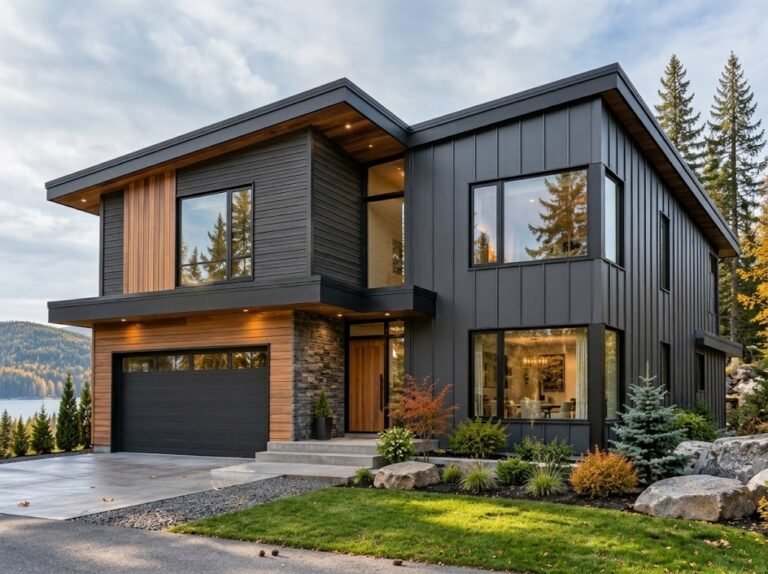
Give black a clear architectural role. It might be the main exterior finish, a frame around the entrance, or the darker material that separates one building volume from another. Following the building’s geometry usually creates a more coherent result than scattering small black patches across the façade.
| Location | What black can contribute | Design point to resolve |
|---|---|---|
| Main entrance | A clear focal point around the front door | Keep the door, address numbers and lighting easy to identify |
| Upper storey or projecting volume | Strong separation from a lighter lower level | Align material changes with actual corners and floor lines |
| Garage façade | A coordinated backdrop for doors and windows | Balance the garage’s visual weight against the entrance |
| Gable or tall feature wall | Emphasis on the roof shape or vertical proportions | Keep trim transitions deliberate and consistent |
| Commercial entrance or storefront | Definition around glazing and signage | Test sign contrast and the appearance after dark |
| Whole-building exterior | A unified, dramatic silhouette | Introduce depth through openings, recesses, texture or landscaping |
Full Black Exterior or Black Accent?
A full black exterior suits a simple, well-composed building. Changes in wall depth, generous windows, and a considered roofline give the dark surface something to reveal. A large, uninterrupted wall may need a different profile rhythm or a contrasting material to avoid looking flat.
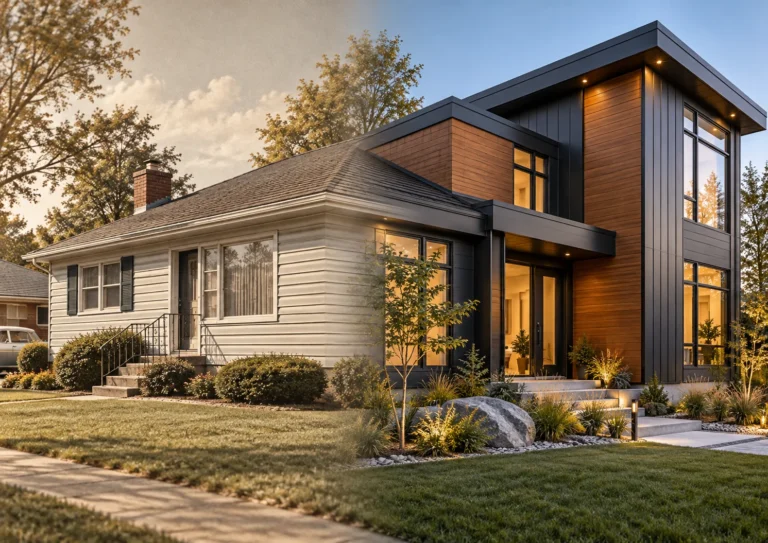
An accent application is useful for existing buildings. Black siding around a new entrance or addition can update the exterior while allowing the original brick or stone to remain the dominant material. Choose a complete wall section or building volume so the intervention feels intentional.
Combining Black Siding with Other Exterior Materials
Contrast works best when each material has a purpose. Let one finish cover the main wall areas, use another to establish warmth or texture, and repeat a limited set of colours in windows, trims and doors.
| Material paired with black | Result to aim for | Practical design tip |
|---|---|---|
| Warm woodgrain aluminum | A softer, more welcoming modern exterior | Concentrate the woodgrain around entrances, soffits or one projecting volume |
| Light limestone or pale stone | Clear contrast between smooth dark lines and natural texture | Check the stone’s undertone beside the black sample |
| Red or brown brick | A contemporary addition to an established masonry palette | Let the existing brick remain visually substantial |
| White siding or light stucco | A crisp, graphic composition | Change materials at corners, recesses or complete wall sections |
| Concrete or grey masonry | A restrained commercial or urban appearance | Compare the greys carefully so the palette feels coordinated |
| Large glazed areas | A dark frame around transparent surfaces | Coordinate siding joints with window and mullion positions where practical |
Black and Woodgrain: Contrast with Warmth
Woodgrain gives the eye a warmer focal point. A black wall can frame a cedar-look entrance, while a woodgrain soffit adds a lighter, more tactile surface above a porch. VEDREX finishes such as Light Cedar, Natural Oak, and Red Cedar offer different directions for that contrast.
Keep the warm finish concentrated. Using it on a sheltered entrance or a clearly defined upper volume often has more impact than distributing narrow woodgrain strips around every window.
Black and White: Let the Building Set the Pattern
Black-and-white exteriors need clear boundaries. A black upper volume above a white base, or a dark entrance set into a light façade, usually reads more clearly than alternating colours without a relationship to the building’s form. Our guide to white aluminum siding explores the lighter side of this pairing.
Profile Width and Direction Change the Design
The same black finish can produce different façades. Narrower profiles create more frequent joint lines, while wider profiles establish a broader rhythm. VEDREX’s aluminum siding systems include 4-inch and 6-inch V-Groove options for comparing these effects.
- Vertical lines can emphasise a tall entrance, gable or stairwell volume.
- Horizontal lines can connect windows and reinforce the width of a low building.
- Narrower profiles create a finer pattern on smaller accent areas.
- Wider profiles create fewer joint lines across the same wall area.
- Changes in direction work best at a corner or a separate building volume.
Plan joints around openings. Window heads, door edges, corners and service penetrations all influence the finished pattern. Confirm the approved installation arrangement for the selected profile before finalising its direction.
Black Aluminum Siding for Residential Buildings
Residential designs need both presence and a welcoming entrance. A black exterior can be striking from the street, but the front door, porch and path should still feel easy to approach. Warm materials, planting and well-placed lighting help establish that balance.
Contemporary Homes and Additions
Use black to explain the building’s form. On a new home, it can define an upper storey or an entrance volume. On a renovation, a black-clad addition can establish a clear relationship with the original house without requiring every existing wall to be reclad.
Brick Homes and Infill Projects
Work with the existing masonry. A black side addition or upper wall can complement brick when the colour change follows a logical boundary. Check the combination beside the existing mortar as well as the brick, because both influence the overall palette.
Porches, Soffits and Rooflines
Decide whether the roofline should blend or contrast. Black siding with a black soffit can create continuity, while a woodgrain soffit introduces warmth above the entrance. A dark porch ceiling also deserves a lighting check so the approach remains comfortable after sunset. See our black aluminum soffit guide for roofline examples.
Black Aluminum Siding for Commercial and Modern Buildings
Commercial façades benefit from a clear visual hierarchy. Black siding can define the public entrance, frame a glazed showroom, or distinguish an office area from a larger industrial building. This is especially useful when a renovation focuses on the customer-facing portion of the property.
- Retail: Frame the storefront while keeping signs and doorways legible.
- Restaurants: Pair dark cladding with warm entrance lighting and a contrasting canopy underside.
- Offices: Use a consistent profile rhythm around glazing and reception entrances.
- Industrial buildings: Concentrate architectural finishes at entrances and prominent street-facing walls.
Design for both daylight and evening use. Review the façade with its proposed signage, exterior fixtures, and neighbouring lighting. A sign that looks clear on a daytime rendering may need a different finish or illumination strategy against a black wall at night.
VEDREX Project Inspiration: Black and Mixed-Material Exteriors
These completed projects show different ways to use dark contrast. The materials are identified below: black ACM panels, woodgrain extruded siding and black soffit each contribute differently to the finished exterior.
Palmerston Drama, Toronto: Black ACM and Red Cedar Siding
Black and warm woodgrain define this Toronto renovation. The Palmerston Drama project combines black ACM panels with VEDREX Red Cedar aluminum siding on the walls and soffits. The dark panels establish contrast, while the cedar finish introduces warmth across selected surfaces.

Design takeaway: Give the dark and woodgrain areas distinct roles. This project is a reference for the colour combination; its black surfaces are ACM panels, while the VEDREX siding is Red Cedar.
East York Cozy: Black Panels with Woodgrain and Existing Brick
An existing brick exterior can remain part of a modern palette. The East York Cozy project combines VEDREX woodgrain siding and soffit profiles with black ACM panels and reddish brick. It offers a useful reference for homeowners considering a dark accent alongside established masonry.
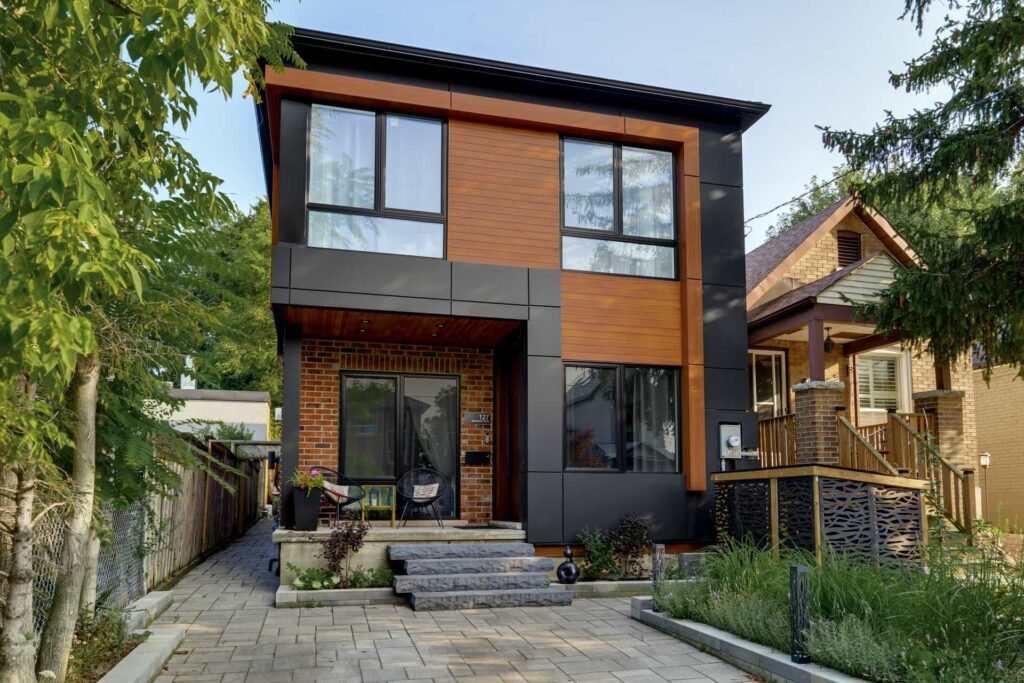
Design takeaway: Compare new finishes with the materials already on site. Black does not require removing every warm or traditional element from the exterior.
Etobicoke Power: A Dark Grey Commercial Alternative
Dark grey offers another route to a contemporary commercial exterior. At Etobicoke Power, an industrial-building renovation uses VEDREX Charcoal Gray siding and soffit profiles at the entrance canopy and adjacent walls, coordinated with grey ACM and contrasting woodgrain panels.
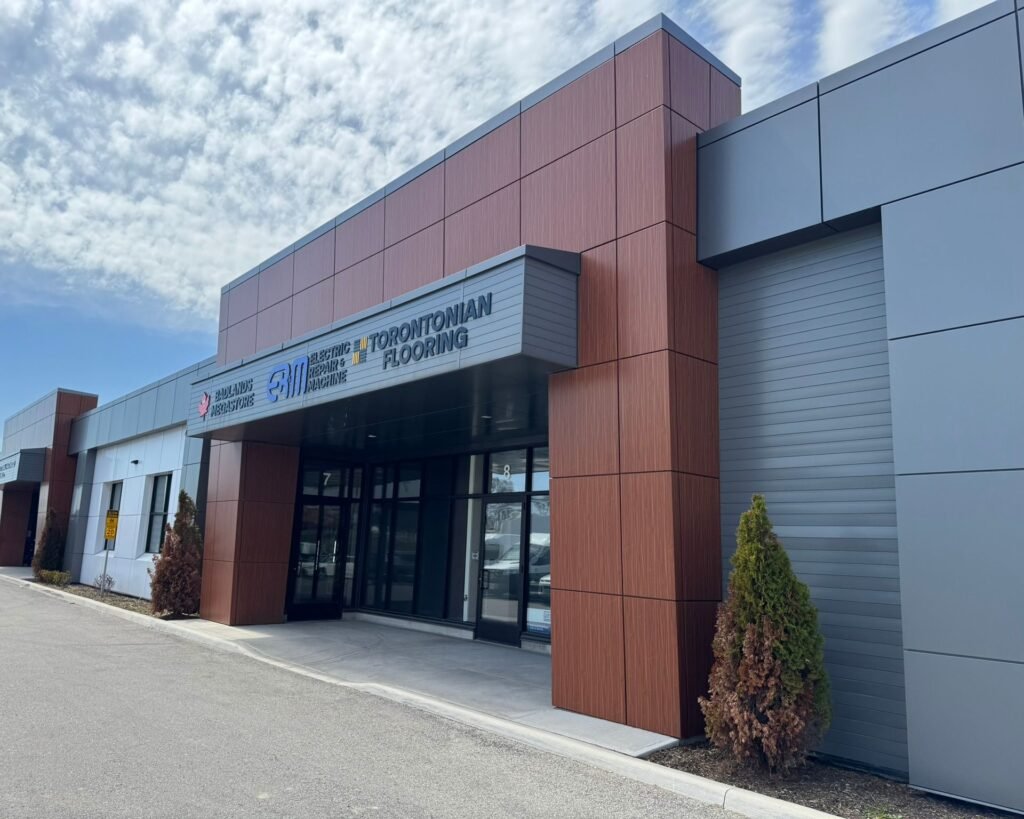
Design takeaway: A focused entrance renovation can give a large building a clearer public face. This is a Charcoal Gray example, useful when comparing the visual weight of black with a lighter dark finish.
Does Black Aluminum Siding Get Hot?
Black siding can become hotter in direct sunlight than a comparable light-coloured finish. The National Research Council of Canada’s archived publication on exterior building surface temperatures explains how colour, orientation and surrounding surfaces affect surface temperature. It supports the underlying principle, rather than providing a temperature rating for a particular VEDREX finish.
A hot exterior surface does not translate directly into the same indoor temperature change. Insulation, air sealing, glazing, shading, and the wall assembly also influence comfort. Natural Resources Canada’s guidance on insulating exterior walls discusses insulation upgrades and strapping that can reduce heat buildup behind siding.
- Review sun exposure: Consider unshaded walls and strong afternoon sun when deciding how much black to use.
- Check nearby surfaces: Adjacent glazing or reflective finishes can alter exposure.
- Allow for movement: Follow the system’s requirements for fastening, joints, and thermal expansion.
- Request finish data: Do not assume a visually black coating has a specific solar-reflectance value.
Use black selectively when exposure is a concern. A shaded entrance or a smaller accent area may deliver the intended appearance while reducing the extent of dark, sun-exposed wall. Whole-building energy effects require assessment of the actual design.
Black Aluminum Siding: Pros and Cons
| Advantage | Trade-off | How to address it |
|---|---|---|
| Strong architectural definition | Large dark areas can feel visually heavy | Balance them with openings, recesses, lighter materials, or planting |
| Clear contrast with stone and woodgrain | Too many competing finishes can look busy | Give each material a defined area and purpose |
| Coordination with dark windows and doors | Different blacks may have different sheen or undertones | Compare actual samples together outdoors |
| Low-maintenance metal construction | Pollen, pale dust and water marks can be noticeable | Follow the finish-specific cleaning instructions |
| A distinctive solid-colour surface | Scratches or exposed bright metal can stand out | Protect the finish during handling and use the approved repair method |
| A bold exterior palette | Sun-exposed dark surfaces can run hotter | Review exposure, coating data and wall-system detailing |
Finalise the Palette Before Ordering
Review one complete exterior section, including siding, window, trim, soffit and adjoining masonry. A sample board or small mock-up makes it easier to judge the combination than separate product photos viewed on different screens.
- Choose the role of black: Main finish, separate volume or accent area.
- Compare finishes: Solid black, charcoal and dark woodgrain.
- Set the profile rhythm: Width, direction and joint alignment.
- Coordinate the details: Corners, trims, doors, soffits and lighting.
- Review exposure: Sunlight, adjacent surfaces and installation requirements.
Bring your drawings and material ideas to the VEDREX team. Contact us for finish samples and project guidance to compare black aluminum siding options and build a coordinated palette for your home or commercial building.