In the world of commercial siding panels, selecting the right exterior cladding is crucial for longevity, aesthetics, and performance, especially in Canada’s diverse and often harsh climates. Commercial aluminum siding panels stand out as a versatile and reliable option, offering superior durability compared to traditional materials. Whether you’re an architect designing a modern office exterior, a builder managing a large-scale project, a constructor focused on efficiency, or a real estate professional prioritizing property value, understanding aluminum siding’s benefits can inform smarter decisions.
This guide explores the transition from residential to commercial applications of aluminum siding, the best types for commercial buildings, and why it’s particularly suited to Canadian weather conditions, drawing from industry insights.
What Sets Commercial Aluminum Siding Apart from Residential Options?
Aluminum siding has long been a staple in residential construction, but its application in commercial buildings requires a shift in focus toward scalability, durability, and performance. Residential aluminum siding often emphasizes aesthetic variety and cost-effectiveness for homeowners, with options like horizontal lap styles mimicking wood for a cozy, traditional look. These panels are typically lighter-gauge (thinner), ranging from 0.019″ to 0.024″ thick, to keep costs down and installation simple, lasting around 20-40 years with proper maintenance.
In contrast, commercial aluminum siding prioritizes robustness to withstand higher traffic, larger surface areas, and more extreme environmental stresses. Commercial panels usually start at 0.032″ thick, but standard commercial structural panels often range from 0.040″ to 0.063″ (approximately 1.6mm) for high-traffic ground-level areas. Commercial-grade aluminum alloys, often from the 3000 or 5000 series, have higher tensile strength (often 20,000+ psi) compared to softer residential alloys, providing better dent resistance against hail or job-site impacts. In Vedrex’s aluminum siding production line, we utilize the 6063-T5 Architectural Grade aluminum alloy, which provides superior toughness and durability for long-lasting performance. This difference stems from the scale: commercial projects cover thousands of square feet, demanding materials that resist fading, denting, and corrosion over decades.
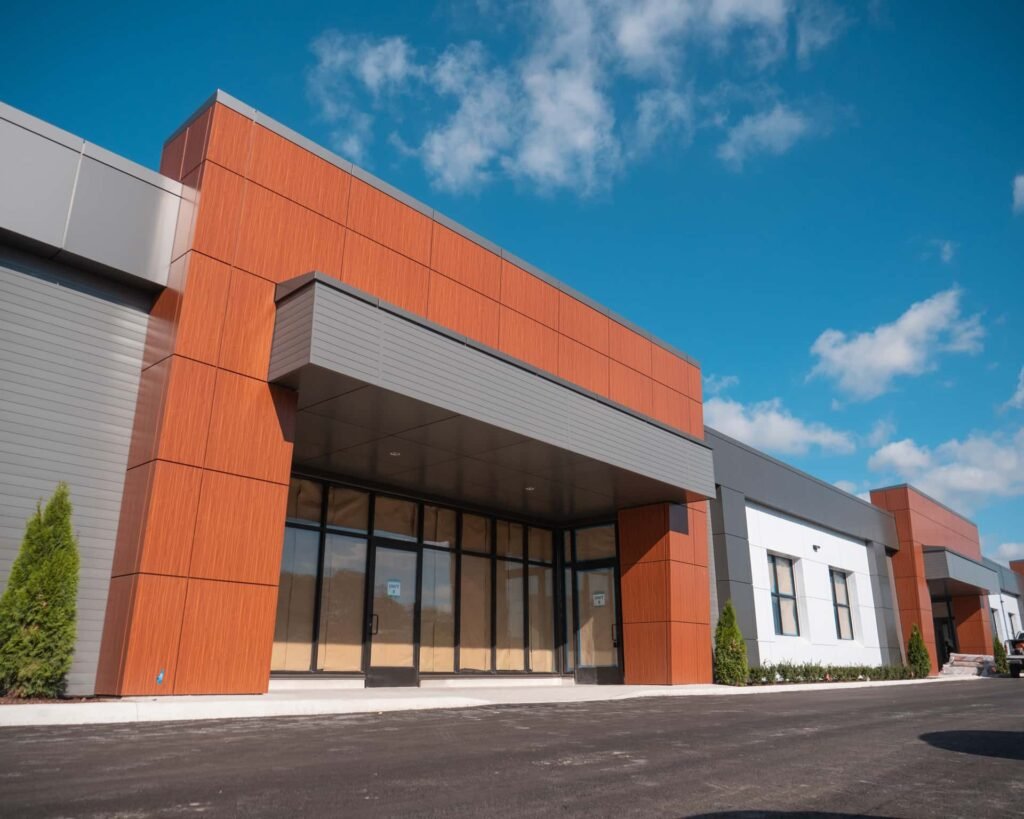
For instance, residential siding might use exposed fasteners for quicker installation, but commercial applications often opt for concealed fasteners to achieve a sleek, professional appearance that aligns with modern architectural trends. Additionally, commercial aluminum siding integrates better with building codes for fire resistance and wind loads, essential for public or industrial structures. We offer consultations to help you find out more about Commercial Aluminum Wall Panels.
To make these differences scannable, here’s a quick reference comparison table:
| Feature | Residential Aluminum Siding | Commercial Aluminum Panels |
|---|---|---|
| Typical Gauge | 0.019″ – 0.024″ | 0.040″ – 0.063″ |
| Panel Length | Short (approx. 12 ft) | Custom/Long (up to 40 ft+) |
| Fastening | Nailing Flange (Exposed) | Concealed Clip System |
| Wind Load | Standard Residential | High Velocity (3.0+ kPa) |
| Life Expectancy | 20–40 Years | 50+ Years |
Types of Aluminum Siding Best Suited for Commercial Buildings
Not all aluminum siding is created equal, and selecting the right type for commercial use depends on factors like building size, aesthetic goals, and environmental demands. Based on current industry standards as of 2025, here are the top types recommended for commercial buildings:
- Vertical Aluminum Siding Panels: Ideal for tall structures like office towers or warehouses, these panels create a streamlined, modern look while directing water downward efficiently. They’re less prone to collecting debris and offer excellent wind resistance, making them a top choice for Canadian climates.
- Board and Batten Metal Siding: This style provides a rustic yet professional appearance, often used in retail or mixed-use developments. The vertical boards with battens (strips covering seams) enhance durability by reducing visible joints, and it’s customizable in aluminum for corrosion resistance.
- Insulated Metal Panels (IMPs): For energy-conscious builders, IMPs combine aluminum skins with foam insulation cores, offering superior thermal performance. They’re perfect for commercial buildings in Canada, where heating costs can soar, and typically offer an R-value of R-7 to R-8 per inch. A standard 3-inch commercial panel provides an effective R-21 to R-24 thermal barrier in a single pass, significantly aiding compliance with NBC Section 9.25 regarding heat transfer.
- Flush or Concealed Fastener Panels: These provide a seamless, high-end finish for contemporary designs favored by architects. Available in steel-aluminum hybrids, they minimize maintenance and are fire-resistant, aligning with commercial safety standards.
- Textured or Smooth Aluminum Panels: Smooth panels suit minimalist aesthetics in urban settings, while textured ones add visual interest and hide minor imperfections over time.
For 2026 trends, insulated and sustainable aluminum options like those from brands such as Vedrex are gaining traction for their eco-friendly profiles and extended warranties. Architects and builders should prioritize panels with high-gauge aluminum for commercial durability. Vedrex.ca’s Aluminum Siding product line includes these options.
Why Aluminum Siding Excels in Canada’s Challenging Climate
Canada’s climate, marked by freezing winters, heavy snowfall, intense UV in summers, and frequent rain, demands siding that can endure without constant upkeep. Aluminum siding for commercial buildings shines here, offering waterproofing that prevents rot and warping, common issues with wood or vinyl in wet regions like Vancouver or Ontario. Unlike vinyl, which can crack in sub-zero temperatures, aluminum maintains flexibility and withstands temperature swings from -40°C to +30°C without degrading.
Aluminum has a Coefficient of Thermal Expansion (CTE) of approximately 24 x 10⁻⁶ m/m°C. This means a 10-meter panel can expand/contract by roughly 12mm across a typical Canadian yearly temp swing (e.g., -30°C to +30°C). This explains why commercial installation systems (clips and rails) are superior to residential nailing flanges; they are engineered to accommodate this movement without oil-canning (buckling).
In snowy areas, aluminum’s lightweight nature (easier on structures during heavy loads) and dent resistance from hail make it superior. Commercial aluminum systems are often tested to withstand wind loads exceeding 3.0 kPa (approx. 60 psf), which is critical for high-rise applications in windy corridors like downtown Toronto or coastal Halifax, per National Building Code of Canada (NBC) requirements. Statistics show aluminum siding lasts 50+ years in Canadian conditions with minimal maintenance, outpacing vinyl’s 20-30 years. For real estate pros, this translates to higher property values and lower insurance premiums due to its fire resistance.
Constructors appreciate the quick installation, reducing labor costs in short building seasons. In coastal or humid provinces, aluminum’s corrosion resistance (via powder coating) prevents rust, ensuring long-term aesthetics. Overall, for Canadian commercial projects, aluminum outperforms alternatives in energy efficiency and sustainability, aligning with green building codes.
Key Benefits of Aluminum Siding for Commercial Applications
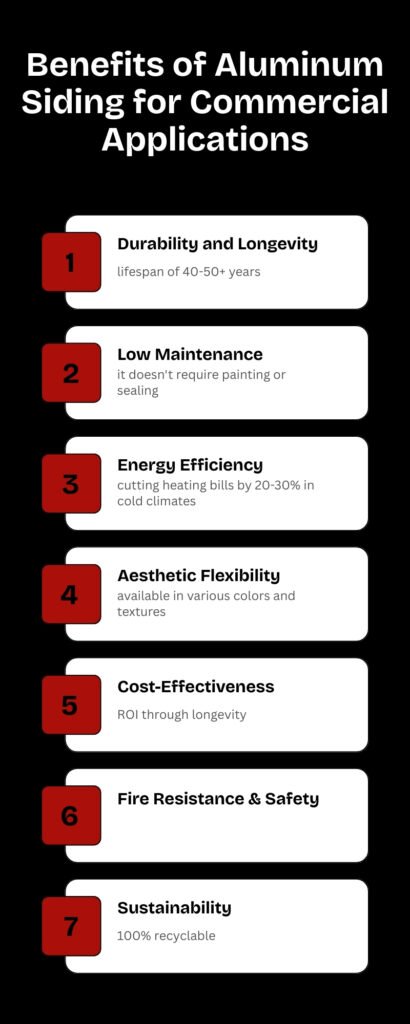
Beyond climate resilience, aluminum siding offers multifaceted advantages for architects, constructors, real estate developers, and builders:
- Durability and Longevity: With a lifespan of 40-50+ years, aluminum resists pests, fire, and extreme weather, reducing replacement costs. One study indicates it withstands winds up to 160 km/h without damage.
- Low Maintenance: Unlike wood, it doesn’t require painting or sealing; simply hose it down annually.
- Energy Efficiency: Insulated versions improve thermal performance, potentially cutting heating bills by 20-30% in cold climates.
- Aesthetic Flexibility: Available in various colors and textures, it suits modern, industrial, or traditional designs.
- Cost-Effectiveness: Initial costs are competitive (around $8-15 per sq ft installed), with ROI through longevity.
- Fire Resistance & Safety: This is a top concern for commercial zoning in Canada. Solid aluminum panels meet the CAN/ULC-S114 standard for non-combustibility in building materials. For high-rises (over 6 stories), they comply with CAN/ULC-S134 (Fire Test of Exterior Wall Assemblies), a critical factor for Canadian architects.
- Sustainability: 100% recyclable, with nearly 75% of all aluminum ever produced still in use today due to its infinite recyclability, according to the Aluminum Association. Aluminum siding contributes to LEED v4 credits for Building Product Disclosure and Optimization – Sourcing of Raw Materials, a major selling point for green commercial developers.
Conclusion: Elevate Your Commercial Project with Aluminum Siding
Commercial aluminum siding panels provide a smart, durable solution for Canadian Commercial buildings, bridging residential aesthetics with industrial strength. Ready to upgrade? Explore Vedrex’s range of aluminum siding materials.